Looking for an authentic handcrafted Chinese teapot? This complete guide explains the main types, materials and traditions to help you choose the right one for your tea.
Why choose a handcrafted Chinese teapot?
A handcrafted Chinese teapot is more than a simple utensil. It is an object shaped by a tradition that spans thousands of years. Made by skilled artisans in China's renowned ceramic regions, each teapot has its own character, and many tea drinkers feel that the material changes how their tea tastes and smells.
The main types of Chinese teapots
1. Yixing Zisha (宜兴紫砂) — The classic
Material: Purple clay (Zisha) from the Yixing area, Jiangsu Province
Key feature: The porous clay absorbs the aromas of tea over time, building up a unique patina. Many enthusiasts dedicate a Yixing teapot to a single type of tea.
Best for: Pu-erh, oolong, black tea
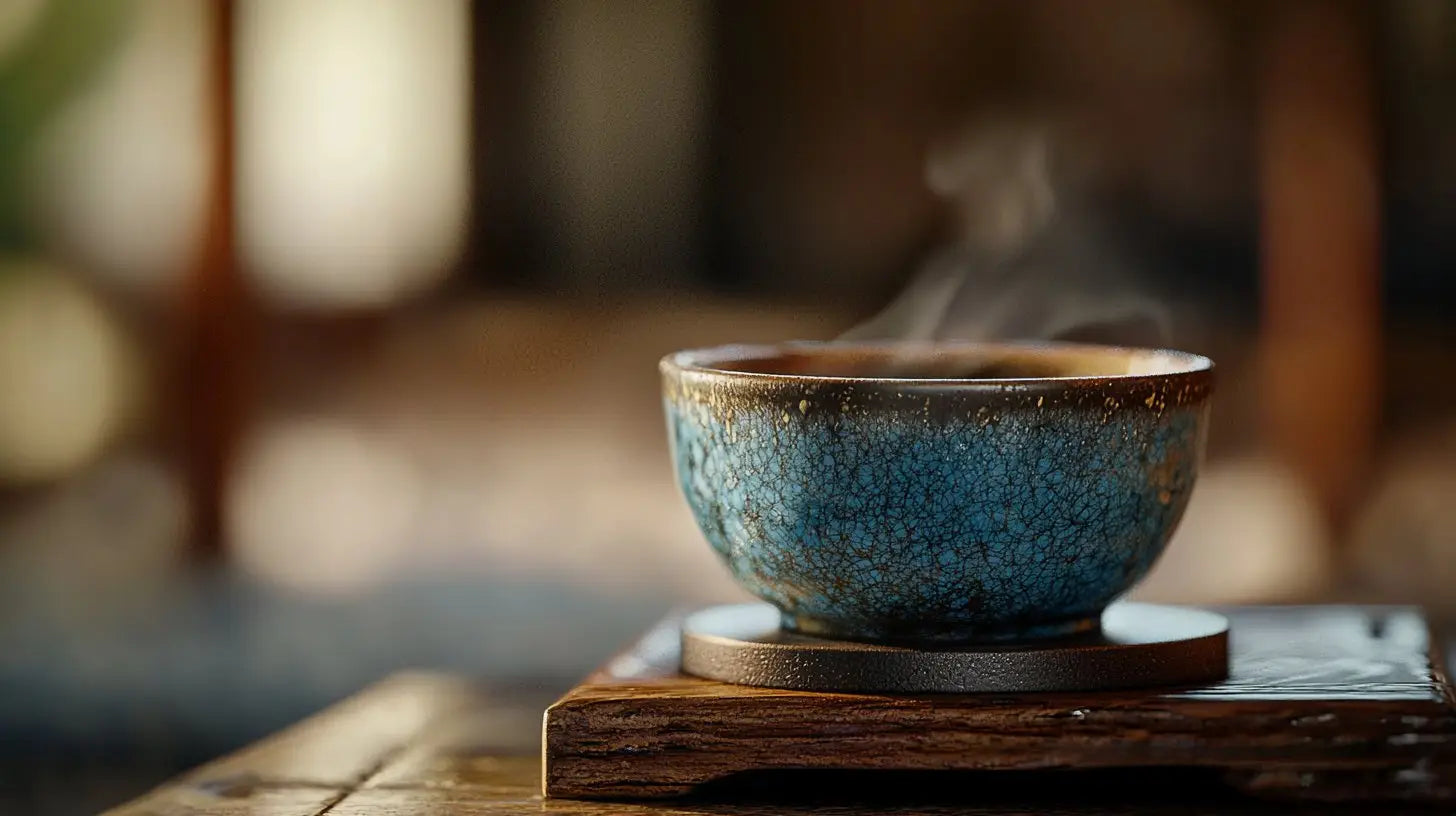
2. Jian Zhan Tenmoku (建盏天目) — The artistic
Material: Iron-rich clay with a crystalline glaze
Key feature: Each piece shows unique patterns formed naturally during firing at over 1300°C. The "oil spot" and "hare's fur" patterns are the most sought after.
Best for: All types of tea, prized for its looks
3. Jingdezhen Porcelain (景德镇) — The elegant
Material: Fine porcelain from the "porcelain capital of the world"
Key feature: Thin walls and a clean, neutral material, often decorated with traditional blue-and-white patterns
Best for: Green, white and jasmine tea
→ Explore Jingdezhen porcelain
4. Dehua White Porcelain (德化白瓷)
Material: Pure white porcelain with an ivory sheen
Key feature: Ideal for seeing the true color of the tea in the cup
How to choose your Chinese teapot
| Criterion | Advice |
|---|---|
| Capacity | 100–200 ml for gongfu brewing, 300–500 ml for Western-style brewing |
| Material | Clay builds up aroma over time; porcelain is the more neutral choice |
| Lid | Should fit snugly, with no play |
| Spout | Smooth pour without drips |
| Handle | Comfortable to hold and well insulated |
Caring for your teapot
- Before first use: Rinse with hot water, then boil for 30 minutes
- After each use: Rinse with hot water only. Never use soap
- Drying: Let it air dry with the lid open
- Patina: The more you use your teapot, the richer its character becomes
Buy your teapot from Tealibere
At Tealibere, we select each teapot from skilled Chinese artisans.
You can also explore our handcrafted gaiwans and our Gongfu tea sets.
Free standard shipping on orders of US$59 or more.