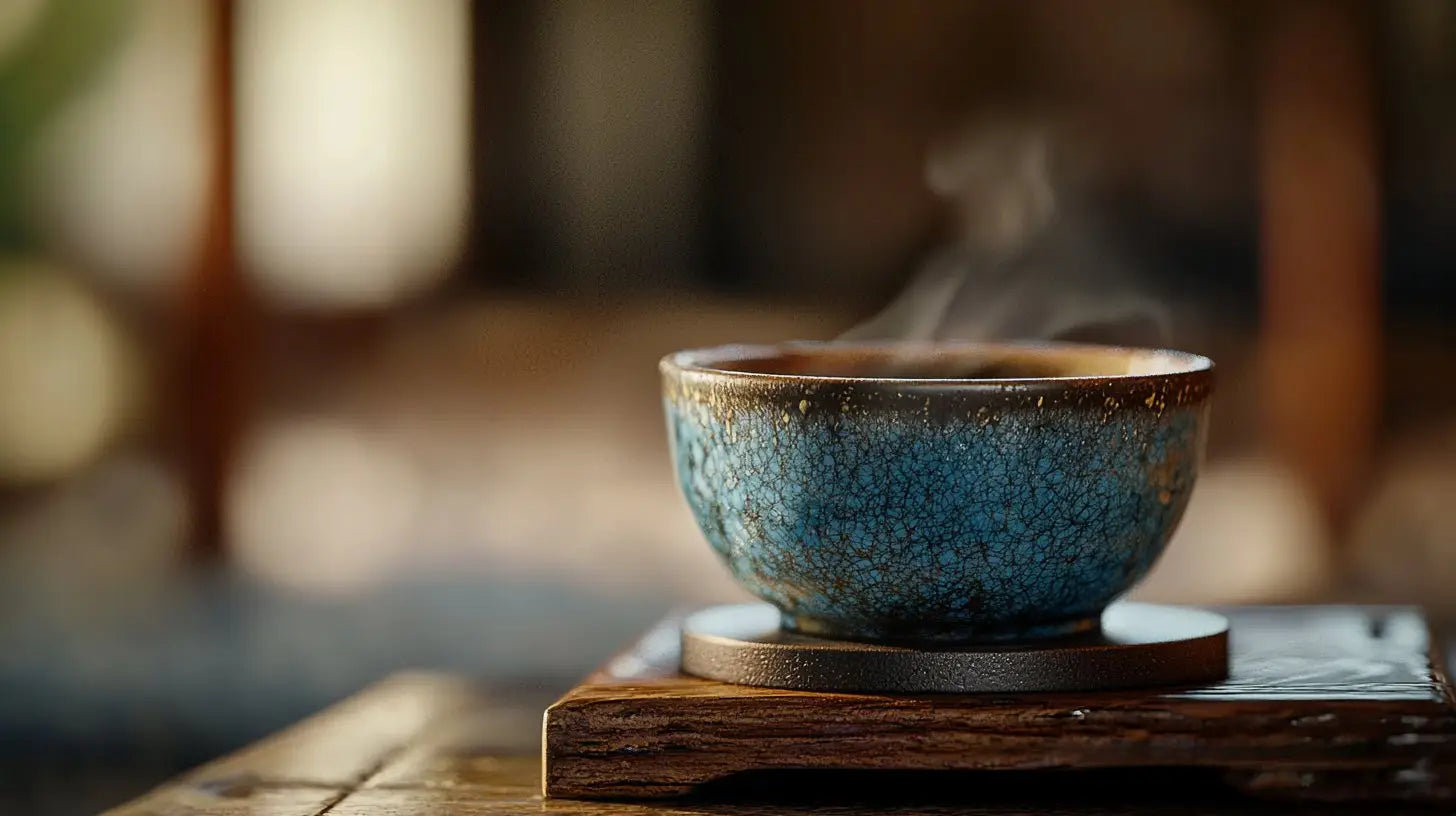
Jian Zhan und Tenmoku sind eng verwandte Namen für dunkle, eisenhaltige glasierte Teeschalen, die für dramatische natürliche Muster wie Ölflecken, Hasenfell und schillernde Ofeneffekte bekannt sind. In einfachen Worten bezieht sich Jian Zhan auf den chinesischen Ursprung und die Handwerkstradition aus Jianyang, Fujian, während Tenmoku der japanische Name ist, der weit verbreitet wurde, nachdem diese Schalen die japanische Teekultur beeinflussten.
Wenn Sie eine Teetasse kaufen, liegt der Unterschied weniger darin, welcher Name „besser“ ist, als vielmehr darin, was Sie verstehen möchten: Herkunft, Glasur, Form, Brennen und täglicher Gebrauch. Tealibere's Jian Zhan Teetassen Der Schwerpunkt liegt auf handgefertigten Stücken, die von der chinesischen Ofentradition inspiriert sind Jian Zhan Kaffeetassen Passen Sie eine ähnliche Glasurschönheit für modernes Trinken an.
Schnelle Antwort
| Frage | Jian Zhan | Tenmoku |
|---|---|---|
| Herkunft des Namens | Chinesischer Name für Jian-Ofen-Teeschalen aus Jianyang, Fujian | Japanischer Name, der mit aus China mitgebrachten Teeschalen und späteren japanischen Interpretationen in Verbindung gebracht wird |
| Gemeinsame Käuferabsicht | Authentische chinesische Teetasse im Song-Dynastie-Stil, Gongfu-Tee | Tenmoku-Glasur, japanische Teeschale, Ölfleck-Keramik, Kunsttasse |
| Visueller Fokus | Eisenreicher dunkler Körper, Ölfleck, Hasenfell, im Ofen verarbeitete Glasur | Ähnliche dunkle Glasurfamilie, die häufig für japanische oder japanisch inspirierte glasierte Schalen verwendet wird |
| Beste Verwendung | Chinesischer Tee, Gongfu-Tee, tägliches Teeritual, Ausstellung | Tee, Schüsselkontext im Matcha-Stil, Anpassungen von Kaffeetassen, Sammeln von Keramik |
Was ist Jian Zhan?
Jian Zhan ist eine chinesische Teeschalentradition, die mit Jianyang in der Provinz Fujian verbunden ist. Die Tassen sind für ihren eisenhaltigen Tonkörper und das Hochtemperaturbrennen bekannt. Beim Brennen kann Eisen in der Glasur natürliche Muster bilden, die wie Öltröpfchen, feine pelzartige Linien, Sterne, Federn oder regenbogenartige Effekte aussehen. Da diese Muster im Ofen entstehen, ist jedes Stück anders.
Für Teetrinker bietet Jian Zhan sowohl Funktion als auch Präsenz. Die dickere Wand hilft dabei, die Wärme zu speichern, die dunkle Glasur hebt blassen Teelikör hervor und die Tasse vermittelt eher den Eindruck eines kleinen handgefertigten Objekts als eines massenproduzierten Gefäßes.
Was ist Tenmoku?
Tenmoku ist die japanische Lesart, die mit dunkel glasierten Teeschalen verbunden ist, deren Einfluss auf chinesische Jian-Ware zurückgeht. In der modernen Einkaufssprache wird „Tenmoku“ häufig allgemein für eisenreiche dunkle Glasuren verwendet, einschließlich Ölflecken- und Hasenfelleffekten. Das bedeutet, dass es sich bei einem als Tenmoku bezeichneten Produkt um eine Schüssel im japanischen Stil, ein chinesisches Jian Zhan-Stück oder eine moderne Keramikinterpretation handeln kann.
Schauen Sie beim Vergleich von Produkten über den Namen hinaus. Überprüfen Sie das Material, den Brennvorgang, das Glasurmuster, die Form und die Größe und ob der Verkäufer das Handwerk klar erklärt.
Gängige Glasurarten
| Glasurstil | Wie es aussieht | Gut für |
|---|---|---|
| Ölfleck | Kleine metallische Flecken oder Tröpfchen auf einer dunklen Oberfläche | Sammler, die ein klassisches dramatisches Muster wünschen |
| Hasenfell | Feine vertikale Streifen, die an weiches Fell erinnern | Teetrinker, die ruhige Bewegung in der Glasur bevorzugen |
| Regenbogen-/Ofenwechsel | Beim Brennen bildeten sich schillernde oder wechselnde Farben | Geschenkkäufer und Menschen, die eine ausdrucksstärkere Tasse wünschen |
| Gesprenkeltes Tenmoku | Dunkle Glasur mit feinen Sprenkeln oder sternförmigen Markierungen | Täglicher Tee- oder Kaffeegenuss mit einem raffinierten handgefertigten Look |
So wählen Sie einen Jian Zhan- oder Tenmoku-Pokal aus
Beginnen Sie mit der Verwendung. Wählen Sie für Gongfu-Tee eine Tasse, die angenehm in der Hand liegt und zu Ihrer Portionsgröße passt. Wählen Sie zum Präsentieren oder Verschenken ein stärkeres Glasurmuster. Wählen Sie für den täglichen Kaffee oder größere Portionen eine Tasse mit Henkel oder ein größeres Format aus der Kaffeetassenkollektion.
- Für Gongfu-Tee: Wählen Sie kleinere Teetassen und kombinieren Sie sie mit einem Gongfu-Teeset.
- Für losen Tee: Kombinieren Sie Jian Zhan mit Chinesischer loser Blatttee und ein Gaiwan oder eine Teekanne.
- Für Kunstsammler: Vergleichen Sie das Glasurmuster, den Brenncharakter und ob jedes Stück handgefertigt ist.
- Für Geschenke: Wählen Sie einen besser sichtbaren Ölfleck oder eine Regenbogenglasur und fügen Sie eine kurze Erklärung der Bedeutung bei.
Pflegetipps
Spülen Sie Tassen im Jian Zhan- und Tenmoku-Stil vor und nach dem Gebrauch mit heißem Wasser aus. Vermeiden Sie Spülmaschinen, scharfe Reinigungsmittel und Scheuerschwämme. Lassen Sie die Tasse vollständig an der Luft trocknen. Mit der Zeit kann die regelmäßige Verwendung von Tee eine leichte Oberflächenwärme erzeugen, aber die Tasse muss nicht wie Yixing-Ton gewürzt werden.
FAQ
Sind Jian Zhan und Tenmoku dasselbe?
Sie sind verwandt, aber nicht genau mit den Einkaufsbegriffen identisch. Jian Zhan weist auf die chinesische Jian-Brenntradition hin, während Tenmoku ein japanischer Name ist, der häufig für verwandte dunkel glasierte Teeschalen und moderne Glasurstile verwendet wird.
Ist Jian Zhan gut für Tee?
Ja. Jian Zhan-Tassen sind für Tee beliebt, weil sie die Wärme speichern, die Farbe des Teelikörs hervorheben und dem Tassenaufguss ein starkes visuelles Ritual verleihen.
Kann ich eine Jian Zhan-Tasse für Kaffee verwenden?
Ja, vor allem, wenn die Tassengröße und -form zum Kaffee passt. Viele Käufer entscheiden sich für Kaffeetassen von Jian Zhan, weil die Glasur ausdrucksstark wirkt und dennoch funktional ist.
Welche Glasur eignet sich am besten für ein Geschenk?
Ölfleck- und Regenbogenglasuren sind auf den ersten Blick am einfachsten zu erkennen. Hasenfell ist ruhiger und spricht oft Menschen an, die subtile handwerkliche Details mögen.
Brauchen Jian Zhan-Becher Gewürze?
Nein. Mit heißem Wasser abspülen und normal verwenden. Im Gegensatz zu Yixing-Teekannen müssen Jian Zhan-Tassen nicht einer Teesorte zugeordnet werden.