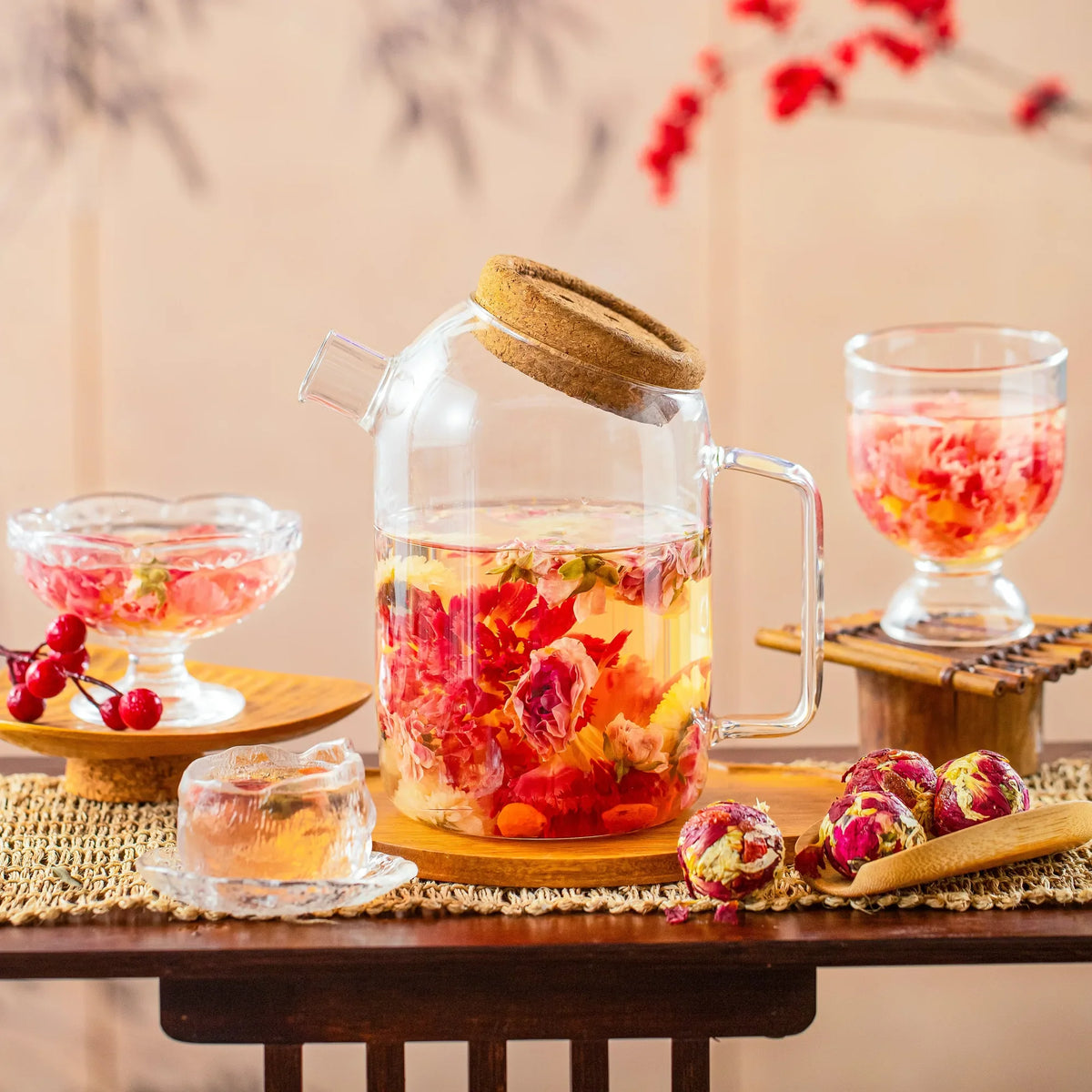
Flowering tea is one of the rare teas where the preparation is part of the show. A compact bloom opens in hot water, revealing leaves and flowers as the liquor develops. The method is simple, but the details matter: a cramped mug can stop the bloom opening, water that is too cool can slow it down, and a long steep can trade a prettier display for a harsher cup.
This guide gives you a reliable starting method, then shows you what to change when the bloom floats, stays tight, tastes weak, or turns bitter. If you already have a box, the directions on its label come first. Ingredients and tea bases vary from one flowering tea to another.
Are flowering tea and blooming tea the same thing?
Flowering tea and blooming tea usually refer to the same style: a compact tea bundle that opens in hot water to create a flower-like display. “Blooming tea ball” is another common name.
Flower tea is a broader term. It may mean a tea scented with flowers, tea blended with petals, or an herbal infusion made mainly from dried flowers. Those products can require different temperatures and steep times. The shape alone does not tell you what is inside, so check the ingredient list before treating every floral-looking tea the same way. If you want the wider context, Tealibere's guide to the six Chinese tea categories explains how the underlying leaf changes the cup.
Flowering tea brewing guide at a glance
| Brewing choice | Best starting point | Why it matters |
|---|---|---|
| Amount | One bloom | Two blooms can crowd each other and make the liquor too strong. |
| Vessel | Clear, heat-safe glass with open space around the bloom | You can watch the unfurling and judge color without disturbing it. |
| Water temperature | Follow the package; use the tea base as a fallback guide | Green, white, black, oolong, and herbal ingredients do not all brew the same way. |
| Steep time | About 3–5 minutes for Tealibere Flowering Tea Blooms | Start tasting within the stated range instead of waiting indefinitely for appearance alone. |
| Serving | Pour once the flavor is balanced | Decanting keeps the first cups from becoming stronger than the last. |
How to brew flowering tea, step by step
1. Read the package before heating the water
Look for the ingredient list, suggested water temperature, steep time, storage directions, and any note about re-steeping. This takes less than a minute and prevents the most common mistake: assuming every bloom uses the same kind of tea.
2. Choose a vessel that gives the bloom room
A clear glass teapot, pitcher, or large glass cup lets you see what is happening. More important, it gives the bundle space to expand. A narrow infuser basket works against the design, so remove the basket when the manufacturer says the vessel can be used without it. Browse Tealibere's glass teapots if your current mug hides or crowds the bloom.
3. Warm the vessel gently
Rinse a heat-safe vessel with warm water and empty it. This reduces the temperature jump when hot water goes in. Do not pour boiling water into ordinary decorative glass that is not rated for hot drinks.
4. Add one bloom, then pour carefully
Place one bloom in the empty vessel. Add water at the recommended temperature, pouring steadily rather than blasting one point. The bloom may sit, roll, float, or open from one side first. None of those movements automatically means something is wrong.
5. Give it time, but taste the tea too
For this product, take a first taste at 3 minutes. If the cup is still light, give it another 30 seconds at a time, up to about 5 minutes. Watch the bundle loosen, but do not use appearance as the only timer. If the tea is already balanced, pour.
6. Serve the liquor rather than leaving it on the bloom
Pour into cups or a serving pitcher once the flavor is where you want it. If you keep half a pot sitting on the bloom, the last cup will be much stronger than the first. A clear glass teapot makes both the opening and the liquor color easy to follow.

What water temperature should you use?
The package temperature is the right answer for that specific bloom. Flowering teas can be built around different tea leaves and botanicals, so a single universal temperature is less trustworthy than the label.
If the package gives the tea base but not a temperature, use that base as a conservative guide. The UK Tea & Infusions Association recommends water around 80°C (176°F) for green tea and 90–98°C (194–208°F) for black tea, while also telling drinkers to read the instructions on the pack. Start there, then adjust by taste. Do not choose the temperature from the color of the flower.
- If the cup is bitter or rough: shorten the steep or use slightly cooler water next time.
- If the cup is thin and the bloom barely loosens: check that the water was hot enough and that the vessel was not cold.
- If the package names only botanicals and no true tea: follow its infusion directions rather than borrowing a green-tea rule.
How long should flowering tea steep?
For Tealibere Flowering Tea Blooms, allow about 3–5 minutes, with the package directions taking priority. Other brands may specify a different range. The best stopping point is when three things line up: the bundle has opened enough to enjoy, the liquor has developed color and aroma, and the taste is still balanced.
A bloom does not have to look perfectly symmetrical to be ready. It was made from botanical material, so placement, shape, and color naturally vary. Waiting several extra minutes for one last petal to move can make the tea stronger without improving the experience.
Flowering tea troubleshooting
| What you see or taste | Likely reason | What to try next |
|---|---|---|
| The bloom stays tight | The water may be too cool, the vessel may be cold, or there may not be enough room. | Confirm the label temperature, warm the vessel, and use a wider heat-safe glass container. |
| The bloom floats | Air can remain inside as the dry bundle hydrates. | Wait a little longer. If needed, move the water with one gentle swirl rather than pressing the bloom down. |
| The tea tastes bitter | The water was too hot for the base tea or the liquor sat on the bloom too long. | Pour the current liquor, then reduce temperature or time on the next brew. |
| The tea tastes weak | The vessel may hold too much water for one bloom, or the water may be too cool. | Use a smaller vessel within the package guidance, or check the recommended temperature. |
| Loose petals reach the cup | Natural flower material can separate as the bloom opens. | Pour through a small strainer if you prefer a clear cup. Do not confine the dry bloom inside a tiny basket. |
| The bloom looks different from the photo | Botanical shapes and colors vary from piece to piece. | Judge the product by safe preparation and taste, not by exact symmetry. |
Can you re-steep a flowering tea bloom?
Sometimes, but do not promise yourself a fixed number of infusions. Re-steeping depends on the tea base, bloom size, first steep, and package guidance. If the maker recommends it, add fresh hot water soon after the first serving and taste the second infusion early. It will usually be lighter.
If the first pot sat for a long time, or the maker does not give storage guidance for a wet bloom, discard it rather than improvising an overnight storage method. Dry unused blooms should stay sealed, cool, dry, and away from strong odors, following the label.
What to check before buying flowering tea as a gift
Flowering tea makes sense as a gift when the recipient enjoys the visual preparation as much as the drink. Before buying, check the parts people often assume are included:
- Tea or full set? Confirm whether the listing includes only the blooms or also a teapot and cups.
- Clear brewing vessel: Make sure the recipient owns heat-safe glass with room for a bloom.
- Ingredient label: Check the tea base, botanicals, allergens, caffeine information, and preparation directions on the label.
- Pack size: Decide whether the gift is for a first tasting, regular hosting, or sharing between households.
- Presentation: Look for secure compartments and individual protection so the dry blooms arrive intact.

For a broader present, compare Tealibere's tea gifts for tea lovers. For the bloom itself, see the current Flowering Tea Blooms Gift Box page for pack options, availability, and the latest preparation notes.
Choose a flowering tea gift by what the recipient already owns
Choose the tea-only box when the recipient already has a clear, heat-safe vessel with room for a bloom. If they need a vessel as well, select it separately and check its heat rating and internal space before pairing the items.
| Option | Listed contents | Choose this when | Prepare separately |
|---|---|---|---|
| Single Box | 18 blooms | You want the smallest listed pack for a first gift or your own tea shelf. | A clear, heat-safe brewing vessel and cups. |
| Duo Boxes | 36 blooms across two boxes | You want two boxes to share or keep in separate households. | A suitable vessel for each recipient. |
| Three Boxes | 54 blooms across three boxes | You want three boxes for several recipients or repeat use. | Suitable brewing equipment; check the label's storage directions. |
Choose a pack and see current prices. Each option is tea-only: teapots, cups, trays, sweeteners, and other styling props are not included.
Check ingredients before choosing a gift
The product name and flower color do not establish the tea base, caffeine level, or complete ingredient list. If an ingredient or dietary requirement matters to your recipient, ask us to confirm the package details before ordering.
Give the recipient a usable first-brew instruction
Include this simple note with your gift: use one bloom in a clear, heat-safe vessel, follow the package temperature, and start tasting at about 3 minutes. Tealibere's general serving guidance is about 3–5 minutes, with the package directions taking priority. Pour when the flavor is right; each natural bloom can open differently.
For a present built around reusable equipment, compare our tea gifts and starter paths. Browse glass teapots if you are choosing a vessel separately.
Flowering tea FAQs
Do I need a glass teapot for flowering tea?
No, but clear heat-safe glass is the most useful choice. It gives the bloom room to open and lets you judge the unfurling and liquor color. An opaque pot can brew the tea, but it hides the visual part of the experience.
Should I use boiling water for blooming tea?
Not automatically. Use the temperature on the package because the tea base and botanicals vary. If the label identifies a green-tea base but gives no temperature, around 80°C (176°F) is a conservative starting point. Black-tea bases generally use hotter water.
How long does a blooming tea ball take to open?
Tealibere's general guidance is about 3–5 minutes, with the package directions taking priority. Vessel size, starting water temperature, and the natural construction of each bloom can change the visual timing.
Why is my flowering tea not opening?
The most common causes are water that is too cool, a cold vessel, or not enough space. Confirm the package temperature and move the bloom to a wider heat-safe vessel. Give it time before touching it; force can break the display apart.
Does flowering tea contain caffeine?
It depends on what is inside. A bloom made with leaves from Camellia sinensis will contain caffeine, while a botanical-only infusion may differ. Do not decide from the flower color or product name. Check the ingredient and caffeine information on the package.
Can I eat the flower after brewing?
Treat the bloom as an infusion ingredient, not a garnish to eat, unless the package specifically says otherwise. Botanical ingredients vary, and “edible flower” does not automatically mean every part should be eaten after a long hot steep.
A simple first setup
Start with one bloom, one clear heat-safe vessel, and the package directions. That is enough. The result should be pleasant to drink even if the flower is not camera-perfect.
Explore Tealibere Flowering Tea Blooms, or pair them with a clear glass teapot so you can see the full opening.
Sources and product notes
- Tealibere Flowering Tea Blooms Gift Box: current product inclusions and Tealibere-specific preparation guidance.
- UK Tea & Infusions Association: How to Make a Perfect Brew: base-tea temperature guidance and the instruction to follow the pack.