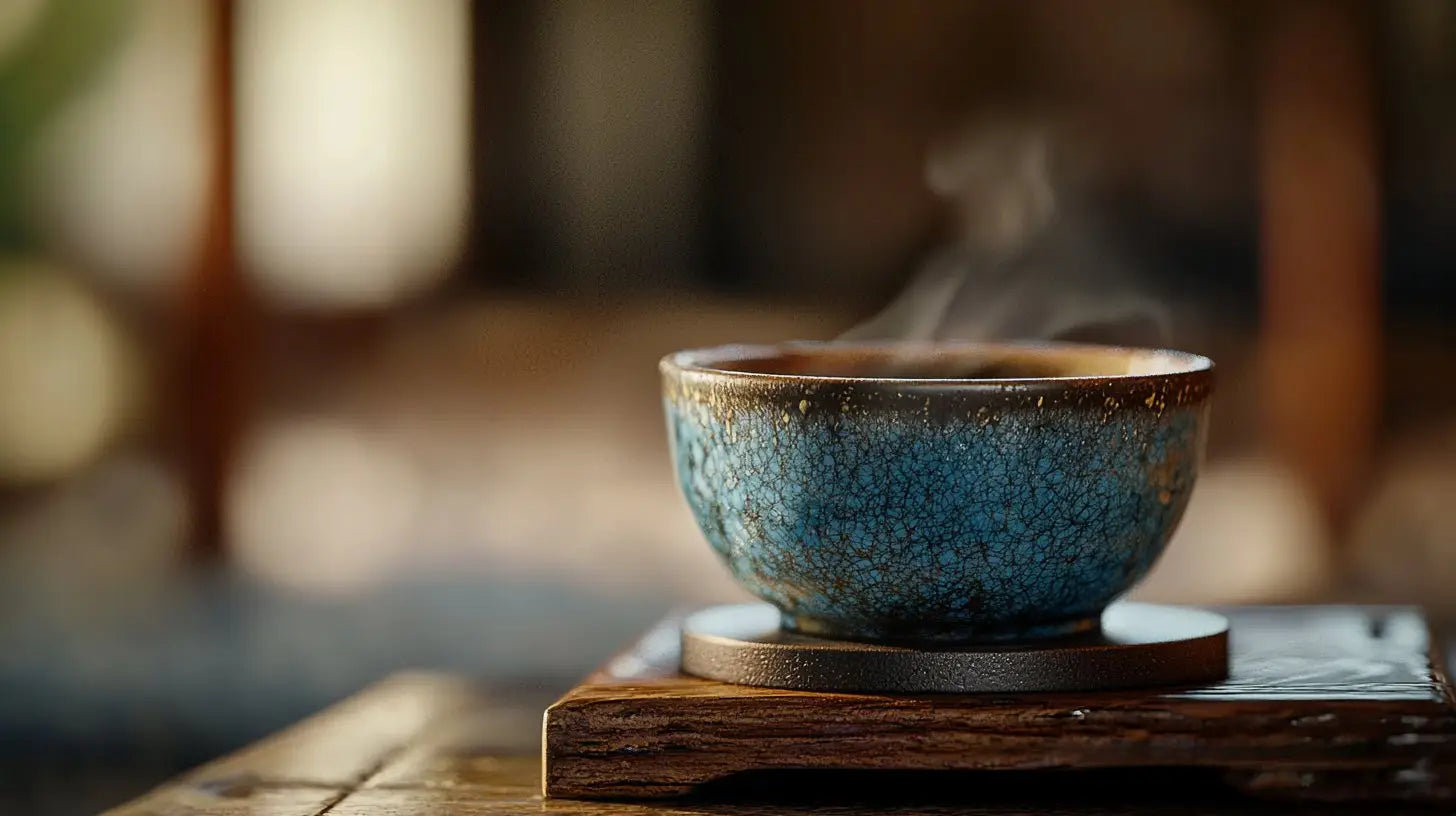
A minimal Gongfu tea setup for one person can be very small: a 100 to 120 ml gaiwan or small teapot, one or two cups, good loose leaf tea, and a way to handle rinse water. A fairness pitcher and tea tray make the session cleaner, but they are not proof that you are doing Gongfu tea correctly. Start with pieces you will use every week, then add the rest when your routine becomes clear.
This guide is for the buyer who likes the idea of Gongfu tea but does not want a crowded 15-piece set on day one. If you already know you want a coordinated kit, browse Tealibere's Gongfu tea sets. If you want the most flexible first step, begin with a handmade gaiwan and a tea you actually want to drink.
Quick Answer: The Five Pieces That Matter
| Piece | For one person | Why it matters | Tealibere path |
|---|---|---|---|
| Brewer | 100 to 120 ml gaiwan, or a small teapot | Controls short infusions without making too much tea | Handmade gaiwans |
| Cup | One cup, or two small cups if you like faster cooling | Lets you taste each infusion while it is fresh | Jian Zhan tea cups |
| Tea | One oolong, Pu-erh, white tea, or black tea to learn with | The leaves teach you more than extra tools do | Loose leaf Chinese tea |
| Pitcher | Useful, not mandatory | Evens out strength and keeps the pour tidy | Tea pitchers |
| Tray | Helpful if you rinse leaves or brew at a desk | Catches water and keeps the setup relaxed | Tea trays |
Start With a Gaiwan Unless You Know Your Tea Lane
For most beginners, a gaiwan is the cleanest first brewer. It works with oolong, Pu-erh, white tea, black tea, and green tea. It is also easy to rinse and does not hold a strong memory of the previous tea. That matters when you are still learning what you like.
A small teapot is the better first choice if you dislike holding a hot gaiwan or you already know you want a more familiar handle-and-spout pour. Choose glazed ceramic or porcelain for broad use. Choose Yixing or other unglazed clay later, once you know the tea family you want to dedicate to that pot. For a broader starter guide, read Gongfu Tea Set for Beginners.
Choose Size by Session, Not by Ceremony
For one person, smaller is usually better. A 100 to 120 ml gaiwan lets you brew several short infusions without filling your cup with more tea than you want to drink. If you use a 180 ml or 200 ml brewer alone, you may either waste leaf or end up drinking each infusion too slowly.
If you like concentrated tasting sessions, stay near 80 to 100 ml. If you want a calmer evening cup with less repetition, 120 to 150 ml can still make sense. The point is not to copy a formal table. The point is to make a setup that fits your hand, your cup, and the amount of tea you drink in one sitting. Tealibere's gaiwan size guide goes deeper on this choice.
Do You Need a Fairness Pitcher?
A fairness pitcher, also called Gong Dao Bei or Cha Hai, is useful when you want the whole infusion to taste even. You pour the brewed tea from the gaiwan into the pitcher, then pour from the pitcher into the cup. For one person, this is not required, but it makes the rhythm easier if your cup is small or you like to compare several infusions side by side.
If you are building a tidy solo setup, a clear pitcher such as the Glass Fairness Cup Gong Dao Bei is a practical upgrade. If you are still deciding whether the piece matters to you, read Tealibere's guide to what a fairness pitcher does in Gongfu tea.
Do You Need a Tea Tray?
You can start without a tray if you brew over a kitchen counter, use a small bowl for rinse water, and pour carefully. A tea tray becomes useful when you brew at a desk, rinse the leaves before drinking, use a tea pet, or want a cleaner place to set a wet gaiwan lid.
For one person, choose a compact tray before a large ceremonial table. A small tray keeps the setup visible and easy to store, which means you are more likely to brew often. Tealibere's Quiet Stream Compact Bamboo Tea Tray is a product path for buyers who want a contained solo station; the full tea tray collection gives more sizes and styles. If you are unsure whether the tray belongs in your first order, use the beginner guide on whether you need a tea tray for Gongfu tea.
Three Good Buying Paths
The Flexible First Setup
Choose a porcelain or ceramic gaiwan, one cup, and one loose leaf tea. This is the best route if you want to learn the difference between oolong, Pu-erh, white tea, and black tea without committing to one clay teapot. Start with Tealibere's handmade gaiwan collection and the loose leaf Chinese tea collection.
The Tidy Desk Setup
Choose a small gaiwan or teapot, a cup, a fairness pitcher, and a compact tray. This path is best if you brew while working, keep your teaware on a shelf, or want the rinse water handled neatly. Use the tea pitcher collection and tea tray collection as the two support categories.
The Giftable Complete Setup
Choose a coordinated Gongfu set if the buyer wants the pieces to match or if this is a gift for someone who may not enjoy assembling a kit one item at a time. A complete set should still be practical: small brewer, usable cups, a pitcher or tray if included, and no pile of accessories the recipient cannot name. Start with Gongfu tea sets, then add loose leaf tea if the set does not already include a tea path.
What to Skip at First
Skip multiple clay teapots, oversized trays, too many tasting cups, decorative tools you cannot explain, and large tea hauls before you know your taste. Gongfu tea becomes easier when every piece has a job. If a tool does not change the pour, cleanup, tasting, or storage, it can wait.
Also be careful with very cheap unglazed clay teapots if you cannot verify the material. A beginner is better served by a clean glazed gaiwan than by a clay pot that makes every tea taste muddy. Good tea, clean water, and a comfortable pour matter more than owning a complicated table.
Check a compact tea tray against your actual setup
For one or two drinkers, choose a tray around the brewer, pitcher, and cups you plan to use. Cup count alone cannot tell you which tray fits, and outside measurements do not tell you how much flat brewing area or water storage it provides.
| Tray | Length × width × height | A useful comparison |
|---|---|---|
| Quiet Stream compact | 36 × 25 × 4 | One listed size for a fixed footprint. |
| Flowkeeper | 30 × 19.5 × 4; 40 × 24 × 4; 50 × 28 × 4 | Three footprint choices at a listed height of 4 cm. |
| Magpie Song | 30 × 18 × 7; 38 × 23 × 7; 48 × 28 × 7 | Three footprint choices at a listed height of 7 cm. |
These are product-listing dimensions. They do not establish usable surface area, reservoir volume, or the number of cups that comfortably fits. Select the actual size option when comparing current prices.
Make a dry layout before choosing the size
- Measure the clear area on your table, allowing room to lift the kettle and move your hands.
- Mark the proposed tray's outside length and width on paper or with removable tape.
- Place your dry brewer, pitcher, and cups inside that outline, with space between them for pouring. Keep each piece away from the edge.
- Check the product's water-collection design. A removable reservoir needs emptying space; an external drain needs a hose route and a receiving container.
- Check how the tray opens for cleaning and where it will dry after use.
Use the Quiet Stream compact tray, Flowkeeper size options, and Magpie Song tray as comparison points. Check the selected variant's dimensions and ask about usable surface area, reservoir volume, or included drain parts when those details are not listed.
Choose the pitcher around the brewer
A fairness pitcher needs to receive a full infusion with space left for a controlled pour. Compare the brewer's working amount with the pitcher's listed capacity instead of matching their names or appearance. The Glass Fairness Cup is listed at 400 ml and the Tree Ripple glass pitcher at 300 ml. Leave headroom rather than treating either stated capacity as the ideal working fill.
A tray is an optional part of a minimal setup. If you already manage drips with a suitable bowl and a towel, keep that arrangement until a dedicated tray would make your sessions easier. Read the tea tray guide or compare the current tray collection.
FAQ
What do I need for a minimal Gongfu tea setup?
You need a small brewer, one or two cups, loose leaf tea, hot water, and a place to handle rinse water. For most beginners, that means a 100 to 120 ml gaiwan, a cup, and a simple bowl or tray. A fairness pitcher is useful but not mandatory for one person.
What size gaiwan is best for one person?
A 100 to 120 ml gaiwan is the safest first size for one person. It makes short infusions without producing too much tea at once. Smaller gaiwans can be excellent for focused tasting, while larger ones are better when sharing tea with another person.
Do I need a fairness pitcher for solo Gongfu tea?
No, but it helps. A fairness pitcher makes the infusion even, keeps the pour tidy, and gives the tea a brief place to settle before it reaches your cup. If your gaiwan pours neatly into your cup and you like the rhythm, you can add the pitcher later.
Do I need a tea tray for Gongfu tea?
You do not need a tea tray to begin, but it makes the setup cleaner. A tray is helpful if you rinse tea, brew near a laptop, keep a tea pet, or want a dedicated space for wet lids and cups. For one person, choose compact before oversized.
Should a beginner buy a full Gongfu tea set?
A full set is good when you want matched pieces or a giftable presentation. If you are buying for yourself and still learning, individual pieces are often better. Start with the brewer, cup, and tea. Add a pitcher, tray, and matching cups when you know what you use.
What tea should I buy with a first Gongfu setup?
Choose a tea that rewards short infusions: oolong, Pu-erh, Chinese black tea, or a structured white tea. If you are unsure, choose one approachable loose leaf tea first rather than buying many teas at once. Learning one tea well makes the next purchase easier.
Next Step
If you want the simplest path, pair a handmade gaiwan with one loose leaf Chinese tea. If you want a ready visual setup, start from Tealibere's Gongfu tea sets and add a compact tray or pitcher only when it solves a real brewing problem.