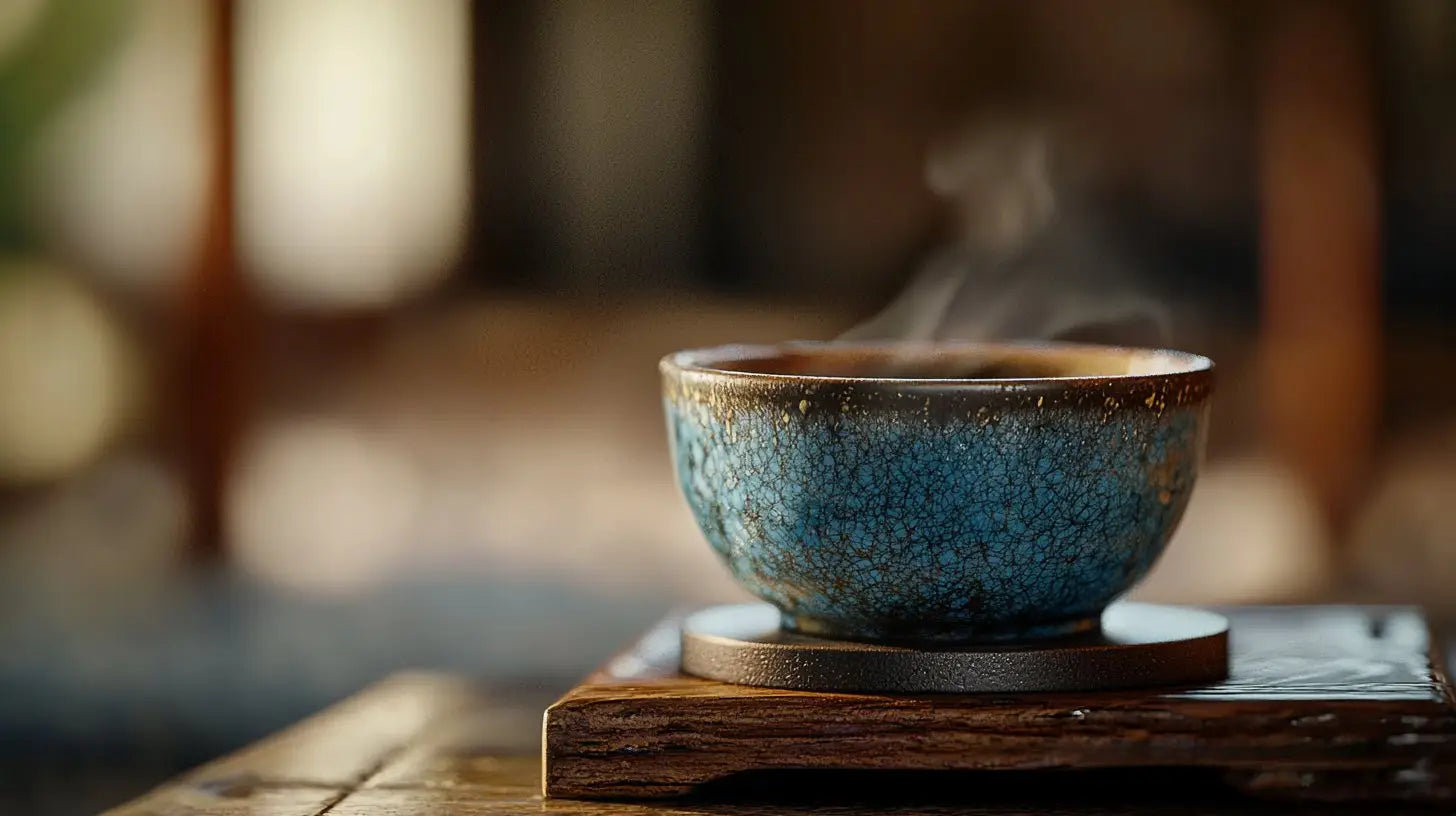
Is a Handmade Tea Cup Worth It? The Real Value of Artisan Teaware
A handmade Jian Zhan tea cup costs €30–€200. A factory cup costs €3. Is the difference justified — or is it just marketing? Here's an honest breakdown of what you're actually paying for.
How Handmade Jian Zhan Cups Are Made
Jian Zhan (建盏) are tenmoku-glazed tea cups from Jianyang, Fujian Province — the same cups used in Song Dynasty (960–1279) imperial tea ceremonies. They're China's most revered tea-drinking vessels.
The Process
- Clay preparation: Local iron-rich clay from the Min River region is processed and aged
- Throwing: Each cup is hand-shaped on a wheel (or hand-pinched)
- Drying: Slow air drying to prevent cracking
- Glazing: Iron oxide glaze applied — the composition determines the final pattern
- Firing: Kiln temperature reaches 1,300°C+ in a wood-fired or reduction kiln
- Natural crystallization: During firing, iron crystals form unpredictable patterns — oil spot, hare's fur, partridge feather, or rare tenmoku patterns
- Selection: 60–80% of pieces are rejected. Glaze patterns are unpredictable; only the best survive
This is the key: No two Jian Zhan cups are identical. The crystalline patterns are determined by complex kiln chemistry — temperature gradients, oxygen levels, ash deposits. Even the same artisan, using the same clay and glaze, cannot produce two identical pieces. Each cup is genuinely a one-of-one creation.
For the full history, read The Legacy of Song Dynasty Jian Zhan.
Factory Cup vs Handmade: What's Actually Different?
| Aspect | Factory/Machine-Made | Handmade Artisan |
|---|---|---|
| Shaping | Mold pressed, identical | Wheel thrown, slight variations |
| Glaze | Chemical composite, consistent | Natural mineral glaze, unpredictable |
| Firing | Electric kiln, precise control | Wood-fired or reduction kiln, variable |
| Pattern | Printed or applied, repeatable | Crystallized in kiln, one-of-a-kind |
| Wall thickness | Uniform, thin | Variable, often thicker |
| Heat retention | Average | Superior (iron-rich clay + thick walls) |
| Feel in hand | Smooth, generic | Textural, glaze has depth and dimension |
| Drinking experience | Functional | Engaging — you notice new colors and patterns over months |
| Price | €3–€10 | €30–€200+ |
5 Real Reasons a Handmade Cup Is Worth It
1. It Genuinely Improves Flavor
This isn't mysticism — it's physics. Jian Zhan cups are made from high-iron clay with thick walls. Iron-rich clay has excellent heat retention and heat distribution, keeping your tea at optimal drinking temperature longer. The mineral content of the iron glaze also has a subtle alkalizing effect on the water, marginally softening the tea's astringency.
The effect is small but perceptible — especially with light oolongs and white teas. Many tea drinkers can tell the difference in a blind tasting between the same tea served in porcelain vs. Jian Zhan.
2. Each Piece Is Genuinely Unique
With factory cups, you get uniformity. With Jian Zhan, you get something that has never existed before and will never exist again. The oil spot patterns emerge from iron crystallization during kiln reduction — a process that can't be precisely controlled.
Over time, as tea oils coat the interior glaze, the cup's patterns shift and deepen. A Jian Zhan that's been used for a year looks noticeably different from a new one. This "raising" process (yang zhan, similar to raising a Yixing pot) is deeply satisfying.
3. Better Tactile Experience
Mass-produced cups are smooth and uniform. Handmade cups have weight, texture, and warmth. The glaze has depth — you can feel the crystalline ridges of hare's fur glaze under your thumb. The lip of the cup is slightly irregular in a way that feels human and alive.
This matters because tea drinking is a tactile experience. You hold the cup 50–100 times in a single Gongfu session. The cup is not just a container — it's a constant point of sensory contact.
4. Connection to 1,000-Year Tradition
Jian Zhan cups were the vessel of choice during the Song Dynasty — arguably the peak of Chinese tea culture. Song Emperor Huizong declared Jian Zhan the ideal tea cup. Owning and using an authentic Jian Zhan connects you to a millennium of tea history in a tangible way.
This isn't just sentimentality. Understanding a craft's history changes how you experience the object. Knowing that your cup was shaped using techniques refined over 40 generations of potters adds a layer of meaning that a €3 cup simply cannot provide.
5. Cost Per Use Is Low
A €60 Jian Zhan cup, used daily, costs:
- Year 1: €0.16 per session
- Year 3: €0.05 per session
- Year 10: €0.02 per session
And unlike most purchases, a Jian Zhan cup doesn't depreciate, doesn't go obsolete, doesn't need software updates, and actually gets better with use. Compare that to a €5 coffee every morning.
What Handmade Cups Are NOT Worth For
Exaggerated Health Claims
Some sellers claim Jian Zhan cups "release beneficial minerals," "improve blood circulation," or "change water structure." These claims are unsubstantiated. While the iron content may have marginal effects on tea chemistry, no scientific evidence supports health miracle claims for teaware.
"Investment" Speculation
Very rare, master-level Jian Zhan pieces from renowned artisans (国家级大师) can appreciate in value. But treating handmade cups as financial investments is risky and speculative. Buy art because you love it, not because you expect returns.
Replacing a Good Cup You Already Have
If you have a porcelain gaiwan cup that works perfectly, you don't need to upgrade. A handmade Jian Zhan is a meaningful upgrade, not a necessary one. It adds pleasure, not function you didn't have.
Who Should Buy Handmade?
Buy handmade if you:
- Drink tea daily and want to deepen the experience
- Appreciate craftsmanship and unique objects
- Understand that the value is experiential, not magical
- Want a meaningful gift for someone who appreciates tea or art
Skip handmade if you:
- Drink tea casually (1–2 cups occasionally)
- Are purely budget-focused
- Expect measurable health improvements from the cup itself
- Want every cup to look identical (gift sets for uniformity)
Our Jian Zhan Collection
Every Jian Zhan tea cup on Tealibere is:
- Handmade by artisans in Jianyang, Fujian — the historical birthplace of Jian Zhan
- Natural mineral glaze — no artificial colorants
- Kiln-fired individually — each pattern is one-of-a-kind
- Inspected and selected — only pieces meeting our quality standard are offered
Popular styles:
- Oil Spot (油滴盏) — Silver or gold spots floating on a dark base. Learn more →
- Hare's Fur (兔毫盏) — Fine streaks radiating from lip to base
- Tenmoku (天目) — Deep black with subtle iridescent effects
- Partridge Feather — Spotted pattern resembling bird plumage
Frequently Asked Questions
Q: How do I care for a handmade Jian Zhan cup?
A: Rinse with clean water after each use — no soap. Occasionally pour tea over the exterior during sessions to build patina. Let it air dry completely. That's it. Jian Zhan is high-fired stoneware and extremely durable.
Q: Will the color change over time?
A: Yes, and this is desirable. Tea oils gradually coat the glaze, adding depth and warmth. The process takes weeks to months of regular use and is considered a mark of a well-loved cup.
Q: Can I use a Jian Zhan cup for coffee?
A: Absolutely. While designed for tea, Jian Zhan cups work beautifully for espresso, cortado, or small pour-over servings. The heat retention and tactile quality enhance any hot beverage. We even sell Jian Zhan coffee cups for this purpose.
Q: How can I tell if a Jian Zhan is authentic?
A: Authentic Jian Zhan has: (1) a rough, unglazed foot ring exposing dark iron-rich clay, (2) glaze variation that looks natural rather than printed, (3) visible kiln marks, (4) weight — real Jian Zhan is noticeably heavier than factory ceramic. If every cup in a batch looks identical, it's likely mass-produced.
Q: Is a €30 Jian Zhan as good as a €200 one?
A: For daily drinking enjoyment, a €30 artisan Jian Zhan is excellent. Higher prices typically reflect: rarer glaze patterns (shimmer, color-shifting), more acclaimed artisans, smaller/more selective kilns, and thinner-walled precision throwing. The functional difference between €30 and €200 is modest; the aesthetic difference can be dramatic.
The Bottom Line
A handmade tea cup won't change your life. But it will change your tea sessions — subtly, consistently, and permanently. It's the difference between drinking tea and experiencing tea. And at €0.05 per session over three years, it might be the best value upgrade in your daily routine.
Browse Handmade Jian Zhan Tea Cups →
Read the Ultimate Guide to Chinese Teaware →
All Tealibere Jian Zhan cups are handmade by artisan potters in Jianyang, Fujian Province and shipped worldwide with free shipping on orders over €49.