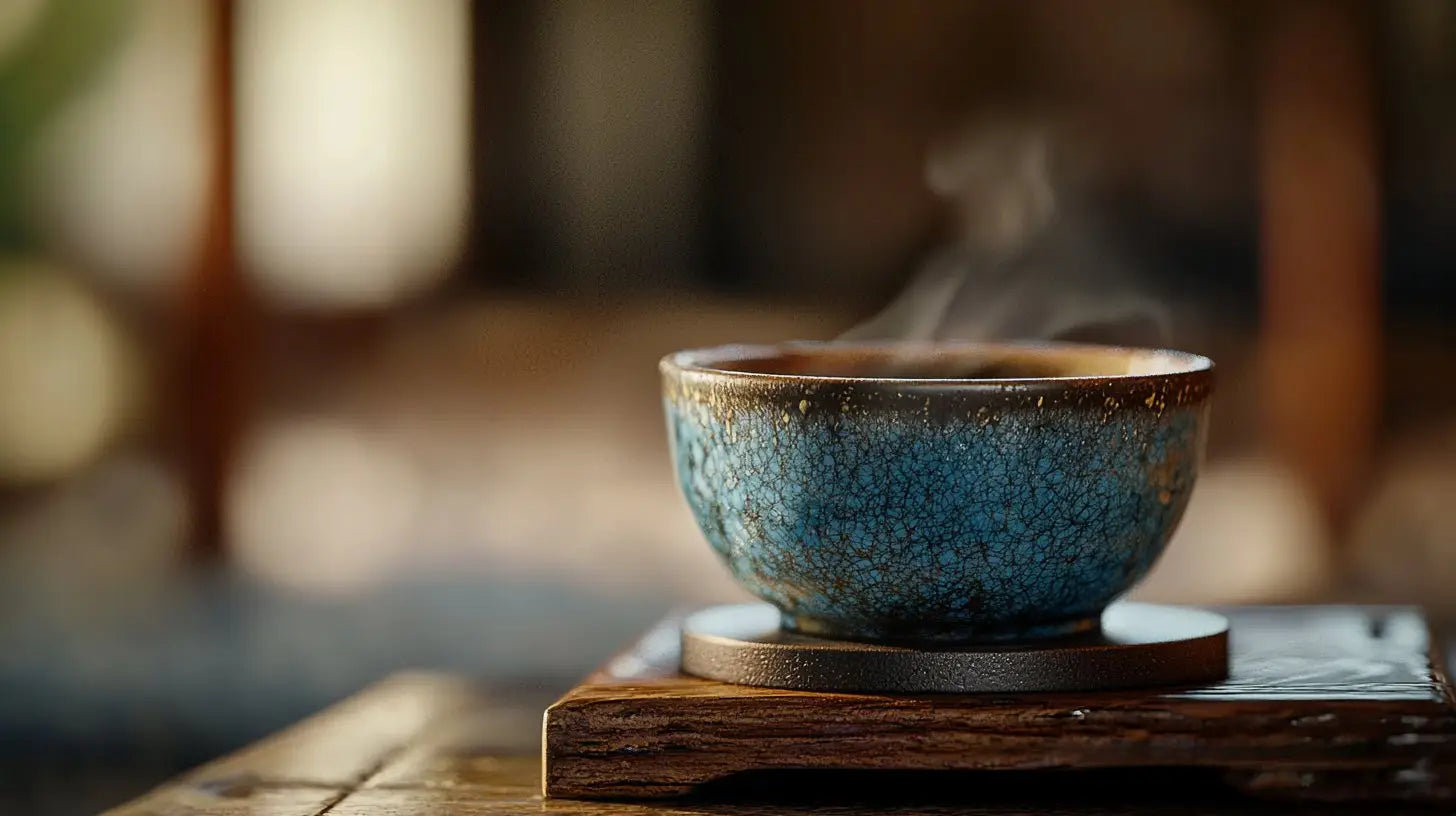
Jian Zhan glaze patterns are easiest to understand as visual families, not fixed quality grades. Oil spot looks speckled, hare fur looks streaked, rainbow glaze shifts with light, and darker Tenmoku-style glazes create contrast for tea liquor. The best choice is the cup that fits your brewing style, feels comfortable at the rim, and matches the teas you actually drink.
This guide focuses on glaze patterns and practical cup selection. If you want the broader naming comparison first, read Jian Zhan vs Tenmoku. If you are ready to compare cups, start with Tealibere's Jian Zhan and Tenmoku cups.
Quick Pattern Guide
| Pattern | What it looks like | Best tea fit | What to check before buying |
|---|---|---|---|
| Oil spot | Metallic-looking dots or speckles on a dark glaze | Roasted oolong, ripe Pu-erh, black tea | Interior photos, spot density, capacity |
| Hare fur | Fine streaks or flowing trails through the glaze | Mineral oolong, raw Pu-erh, black tea | Line direction, rim smoothness, foot stability |
| Rainbow glaze | Iridescent colors that shift with light and angle | Amber oolong, dark tea, visual-focused sessions | Normal-light photos, color realism, usable size |
| Plain dark Tenmoku | Deep black, brown, or iron-rich surface with quieter variation | Black tea, Pu-erh, daily Gongfu tea | Shape, heat comfort, whether it is a bowl or cup |
Jian Zhan, Jianzhan, and Tenmoku: How the Names Affect Glaze Search
Jian Zhan and Jianzhan usually point to Chinese Jian ware inspired cups with iron-rich glaze effects. Tenmoku is a broader international term that often appears on dark-glazed bowls and cups. In search results, the names overlap. A cup listed as Tenmoku may be a bowl-like form, while a cup listed as Jian Zhan may be a small Gongfu tasting cup.
That naming overlap matters for glaze patterns. Oil spot, hare fur, rainbow, and dark Tenmoku labels tell you what the surface may look like, but they do not tell you whether the cup is the right size. Always check capacity, dimensions, rim finish, and whether the seller shows the exact cup or a representative style.
Oil Spot: Speckled Depth for Darker Tea
Oil spot glaze is the easiest pattern for many beginners to recognize. It usually shows small reflective spots over a dark base. Some cups look dense and starry; others have larger, more separated spots. Neither version is automatically better. The question is whether the pattern is visible inside the cup and whether the cup still feels good to drink from.
Oil spot cups pair naturally with teas that have visible body. Roasted oolong tea can look amber and aromatic in a small oil spot cup. Pu-erh tea gives deeper red-brown color and repeated infusions. Black tea brings warmth and brightness, especially in a slightly larger cup.
Hare Fur: Lines, Movement, and Small Sips
Hare fur glaze is more linear. Instead of dots, you see fine streaks, falling trails, or directional movement in the glaze. This pattern can make the cup feel quieter than a high-contrast oil spot cup, but it still gives visual detail during a session.
For tea drinkers, hare fur works well when the cup shape supports aroma and pacing. A 50-70 ml cup is practical for Gongfu oolong or Pu-erh. The small volume encourages you to finish each infusion while warm and notice how aroma, sweetness, bitterness, and body change from steep to steep.
Rainbow Glaze: Beautiful, But Lighting Matters
Rainbow Jian Zhan cups can show blue, purple, gold, or multi-color iridescence depending on the glaze and light. This is visually expressive, but buyers should be realistic: a cup photographed under bright studio light may look quieter on a kitchen table.
If you choose rainbow glaze, look for normal-light photos and interior photos. A dramatic exterior is nice, but the inside of the cup is what you see while drinking. The cup should still have a comfortable rim, stable foot, and capacity that fits your brewer.
Choose Pattern by Tea Style
| Your main tea | Good glaze direction | Why it works | Useful Tealibere path |
|---|---|---|---|
| Oolong | Oil spot, hare fur, rainbow | Oolong is aromatic and changes across short infusions, so small cups make the session more readable. | Browse oolong tea |
| Pu-erh | Oil spot or dark Tenmoku | Pu-erh has body, depth, and darker liquor that stands up well against dark glaze. | Browse Pu-erh tea |
| Black tea | Hare fur, oil spot, larger dark cup | Black tea feels warm and full, especially in a cup large enough for relaxed solo drinking. | Compare cup sizes |
| Mixed Gongfu tea | One practical 50-80 ml cup | A flexible cup lets you learn before collecting several patterns. | Build a Gongfu setup |
Handmade Variation Is Normal, But Function Still Matters
Jian Zhan glaze effects depend on clay body, glaze composition, firing atmosphere, cup angle, and kiln position. That is why two handmade cups can differ in spot density, streak direction, color shift, and edge tone. Variation is not automatically a flaw.
Function still matters. Avoid cups with unclear capacity, sharp rims, unstable feet, or photos that hide the interior. A strong product page should help you understand the cup as drinkware: how much it holds, how it looks inside, how the rim is finished, and what teas it suits.
A Practical Buying Checklist
- Pick the size first: 50-80 ml for most Gongfu sessions, 90-140 ml for relaxed solo tea.
- Pick the tea match second: oolong for aroma, Pu-erh for depth, black tea for warmth and body.
- Pick the glaze third: oil spot for speckles, hare fur for streaks, rainbow for color shift.
- Check the exact photos: interior, exterior, rim, foot, and scale all matter.
- Avoid vague claims: buy based on concrete size, photos, use case, and care details.
For a complete setup, pair the cup with a practical brewer and serving flow. Tealibere's Gongfu tea sets can help you connect the cup with a gaiwan, pitcher, and tray instead of treating it as an isolated object.
FAQ
Which Jian Zhan glaze pattern is best?
There is no universal best pattern. Oil spot is speckled, hare fur is streaked, and rainbow glaze is iridescent. Choose by the look you enjoy, then confirm size, rim comfort, stability, and tea pairing.
Is oil spot better than hare fur?
No. Oil spot and hare fur are different visual effects, not automatic quality grades. Oil spot feels dotted and reflective; hare fur feels linear and flowing.
Why does rainbow glaze look different in photos?
Iridescent glaze changes with light angle and brightness. A rainbow Jian Zhan cup may look vivid in studio photos and quieter in normal home lighting.
What size Jian Zhan cup should I choose?
Choose 50-80 ml for Gongfu oolong or Pu-erh, especially with a gaiwan. Choose 90-140 ml if you want a larger solo cup for black tea or casual daily drinking.
What tea tastes best in Jian Zhan?
Oolong, Pu-erh, and black tea are the strongest matches because they have aroma, body, heat, and liquor color that suit small dark cups. Delicate green or white tea can work, but porcelain may show those teas more clearly.