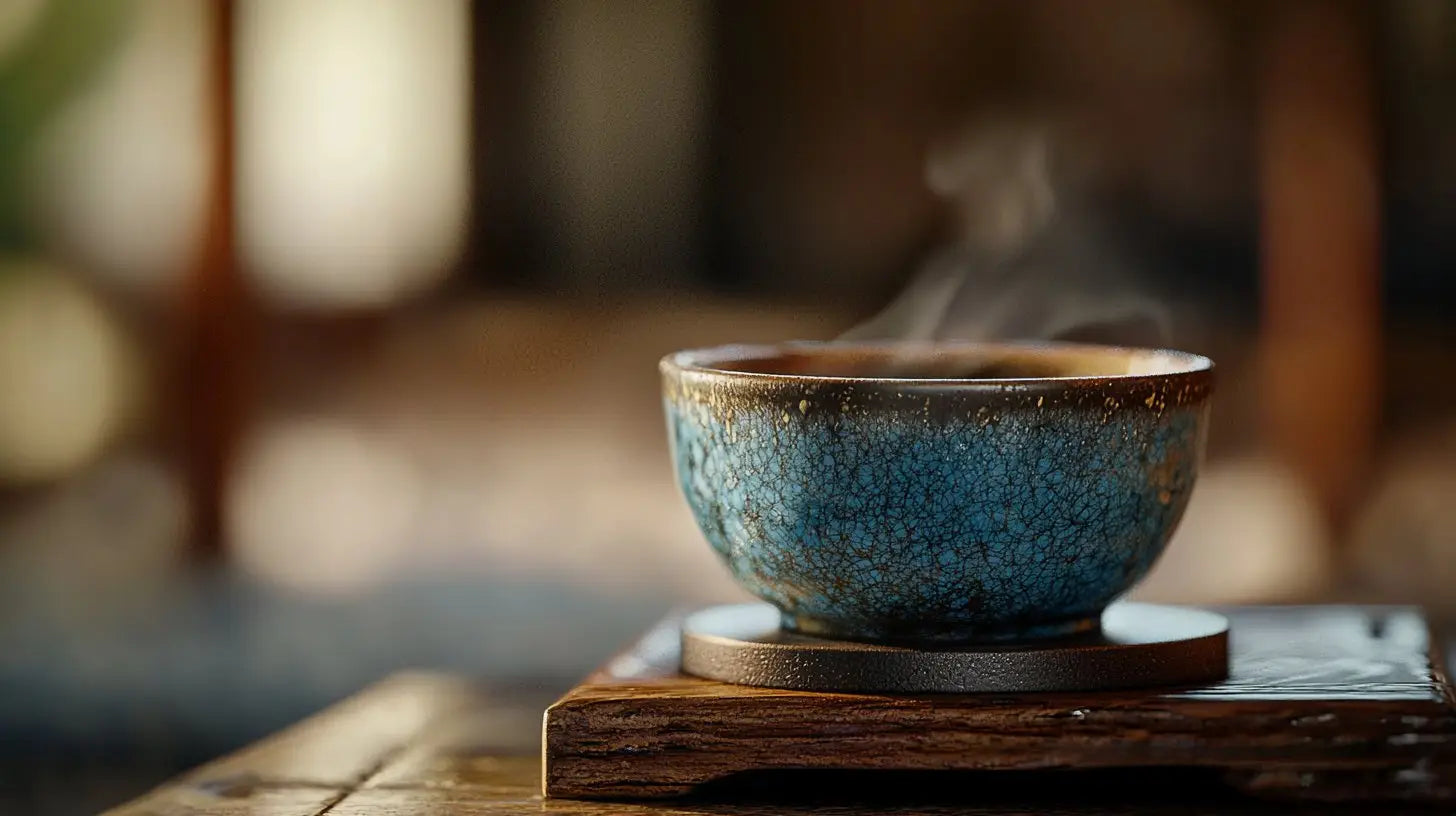
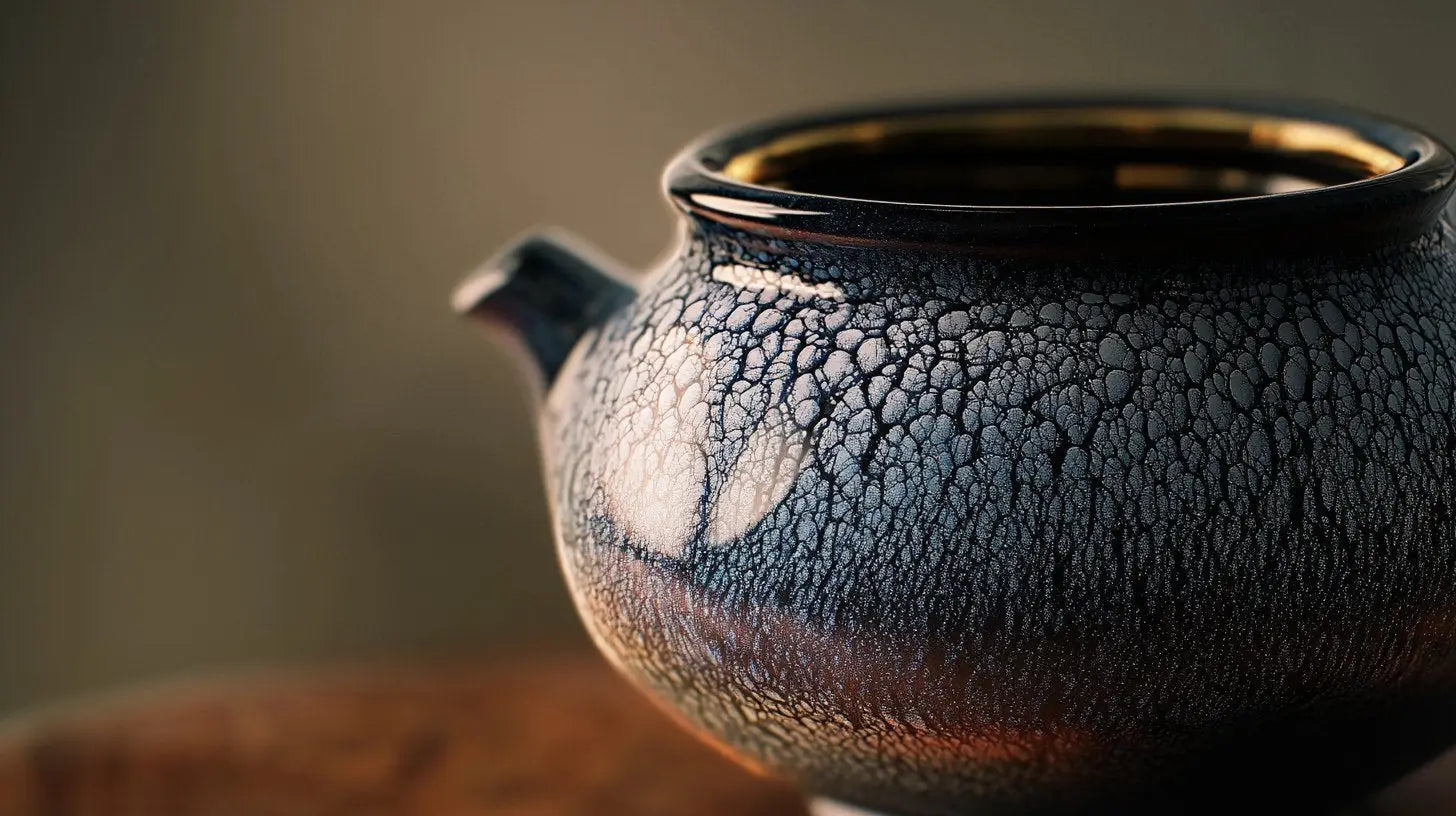
Jun porcelain (钧瓷), also called Jun ware, is porcelain whose glaze is allowed to change colour in the kiln. Copper and iron in the glaze react to the heat and atmosphere of firing, so the finished surface is shaped by the kiln rather than painted on beforehand. Chinese potters call this yaobian (窑变), or kiln transmutation. No two pieces come out exactly the same, and that is the point of Jun porcelain.
Read more about this collection Show less
Jun porcelain from Shenhou
These pieces are fired at Shenhou (神垕) in Yuzhou, Henan, the town Jun ware is named for and a historic centre of its production since the Song dynasty. Most of this series comes from Wangsong Ancient Kiln (望嵩古窑) there.
What you can find in this collection
- Jun porcelain teaware — tasting cups, teapots and tea mug sets for daily brewing and tea tasting.
- Jun porcelain art and collectibles — vases and sculptures made to be displayed and appreciated as individual kiln-fired works.
Common questions about Jun porcelain
What makes Jun porcelain different?
Its colour and pattern develop during firing. The glaze may flow, break into different tones or form distinctive markings, so the finished piece is not identical to a printed or painted design.
Is Jun porcelain suitable for tea?
The teaware in this collection is intended for brewing and tasting. Check each product listing for its stated measurements, capacity and care details before ordering.
Why will my piece look different from the photograph?
Because the glaze is formed in the firing, the piece you receive may differ from the photographs in colour, flow and pattern. Each listing states which measurements and capacities came from the maker and which are not established.
Before you order
Choose a teapot, cup or tea mug for everyday use, or select a vase or sculpture as a display piece. Every Jun porcelain work has its own kiln-transmuted surface and character.
Start with the products below
Choose one clear product path first. Use the side links only when you need a pairing or size check.

Type: Teapot
Royal Wanjun Jun Porcelain Teapot


Type: Sculpture
Nine-Coloured Deer Jun Sculpture

Type: Vase
Abundance Twin Handle Jun Vase

Type: Sculpture
Auspicious Horse Jun Sculpture


Type: Sculpture
Beihong Horse Jun Sculpture


Type: Decorative Vessel
Lotus Ruyi Covered Vessel

Type: Teapot
Shuiping Jun Porcelain Gongfu Teapot


Type: Teapot
Crimson Xishi Jun Porcelain Teapot

Type: Teapot
Crimson Square Jun Porcelain Teapot