For most beginners, a bamboo tea tray is the better first Gongfu tea tray because it is lighter, warmer-looking, easier to move, and usually enough for daily rinse water. A stone tea tray makes more sense when the tray will stay in one place, you want a heavier table presence, and cleanup weight is not a problem.
The real question is not which material is more authentic. It is where the water goes, how often you move the setup, and whether the tray fits your gaiwan, teapot, pitcher, cups, and tea pet without crowding your hands. If you already know you want a bamboo drainage tray, Tealibere's Still Waters Bamboo Tea Tray is a practical product path to compare after reading the decision points below.
Quick Comparison: Bamboo vs Stone Tea Tray
| Choice | Best for | Main tradeoff |
|---|---|---|
| Bamboo drainage tea tray | Daily Gongfu sessions, apartments, desks, small shared tea tables | Must be emptied and dried so moisture does not sit in the tray |
| Stone tea tray | Permanent tea corners, heavier display setups, people who rarely move the tray | Heavy, harder to store, and less forgiving if the size is wrong |
| Ceramic or porcelain tray | Clean visual setups and easy wiping | Can be fragile or limited in drainage volume depending on design |
| Dry towel or bowl setup | Testing Gongfu tea before buying dedicated gear | Works for learning, but does not organize repeated rinse water well |
When Bamboo Is the Better First Tea Tray
Choose bamboo if your Gongfu setup lives on a kitchen counter, desk, coffee table, or shelf between sessions. Bamboo trays are easier to carry to the sink, easier to store, and usually feel less formal than a heavy stone tea table. That matters for beginners because the tray should make brewing easier, not turn every session into furniture management.
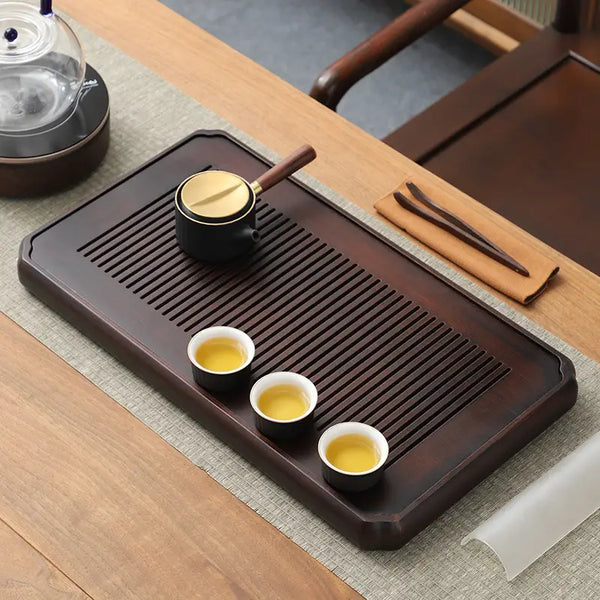
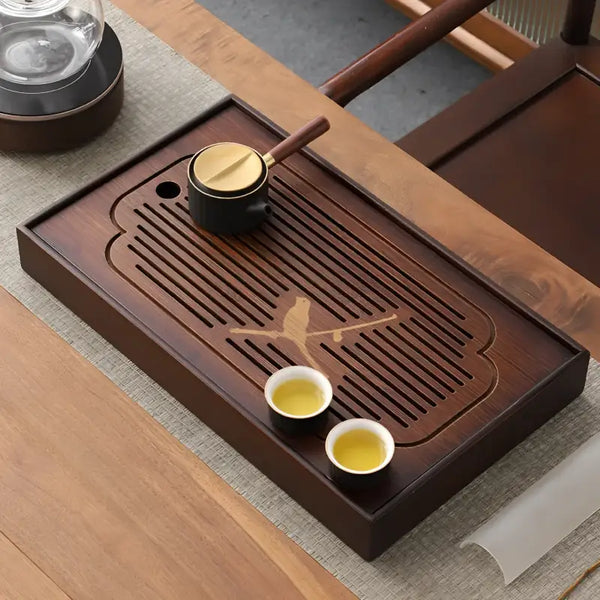
Bamboo is also a natural fit for small and medium layouts. A gaiwan, a fairness pitcher, two cups, and a small tea pet do not need a dramatic slab. They need a stable surface and a place for rinse water. The Still Waters Bamboo Tea Tray is worth comparing when you want a drainage tray that can hold a real Gongfu flow without making the table feel like a display case.
When Stone Makes More Sense
Stone trays can be beautiful when the tea space is permanent. They feel grounded, they look substantial, and they can suit a dedicated tea corner where the tray rarely moves. If you brew in the same place every day and want the tray to anchor the room visually, stone may be the better long-term choice.
The drawback is practical. Stone is heavy, can be awkward to empty or clean, and becomes frustrating if it is too large for the surface. A beginner who still moves between rooms or stores teaware after each session will often use a lighter tray more often than a heavier one.
Drainage Matters More Than Material
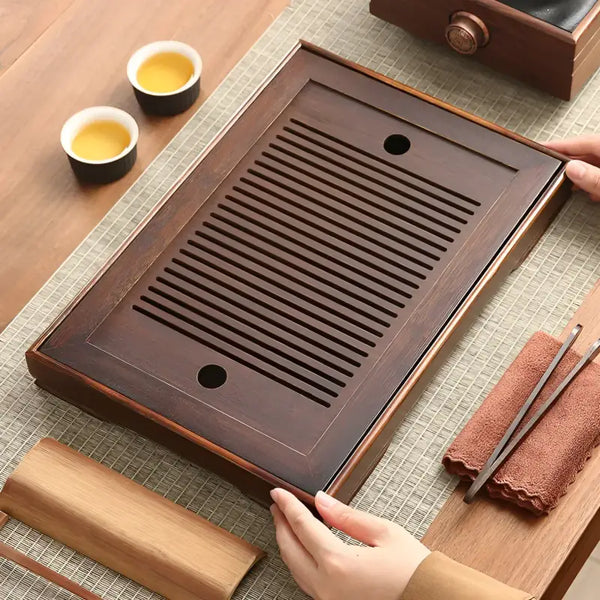
Material gets attention, but drainage is the working feature. In Gongfu tea you may warm the vessel, rinse leaves, empty the first infusion, pour over a Yixing teapot, or give a tea pet a little tea. A tray should make those motions easier. If water pools where your cups sit, or if the reservoir is hard to empty, the material does not save the experience.
Look for a stable top, a reservoir you can remove or empty, and enough room to keep the pouring path clear. If you are still deciding whether you need a tray at all, read Do You Need a Tea Tray for Gongfu Tea? before choosing a material.
How Much Tray Space Do You Need?
| Setup | Good tray size logic | What to avoid |
|---|---|---|
| Solo gaiwan setup | Brewer, one cup, and a small waste-water area | A tray so large that you stop bringing it out |
| Two-person Gongfu session | Brewer, fairness pitcher, two to four cups, and a clear pour path | Cups crowded against the edge or pitcher blocking the brewer |
| Tea pet setup | Side space for the tea pet so water can be poured without crossing cups | A decorative pet placed in the main hand path |
| Yixing teapot setup | Room to warm and pour over the teapot while keeping cups stable | A dry-only surface with no planned rinse-water route |
If the setup includes a gaiwan, use the gaiwan size guide to keep vessel size realistic. Oversized brewers and oversized trays often create the same problem: they look impressive but slow down a daily session.
Care: Bamboo Needs Drying, Stone Needs Handling
A bamboo tray should be emptied after use and allowed to dry in open air. Do not leave rinse water sitting overnight. Wipe tea residue before it becomes sticky, and separate removable layers when the design allows it. Bamboo is practical, but it is still a natural material around hot water.
Stone asks for a different kind of care. It may be easier to wipe, but it is heavier to move and can chip other objects if handled carelessly. If you share a table with laptops, notebooks, or children, the weight and edges matter as much as the look.
Where Still Waters Fits
Still Waters sits in the practical middle of this decision. It is a bamboo drainage tea tray for people who want a real wet setup without committing to a heavy permanent tea table. It makes the most sense for daily Gongfu tea, small shared sessions, tea pet use, and anyone who wants rinse water handled at the table instead of in a side bowl.
Use it as a candidate when your setup already includes a gaiwan or teapot, small cups, and a serving rhythm that creates water. If you are still buying the first brewer, start with the brewer first, then come back to the Tea Tray collection once cleanup becomes the obvious friction.
Build a small Gongfu setup
Not sure which setup fits your table? Start with the Tea gift starter paths or use the small Gongfu setup advisor. The practical starter cart is still simple: Still Waters Bamboo Tea Tray, Landscape Gaiwan, and Glass Fairness Cup.
No coupon is attached to this article link right now. Review the products in cart before checkout, and only use a Tealibere offer after it appears in the cart or checkout.
FAQ
Is bamboo or stone better for a first Gongfu tea tray?
Bamboo is usually better for a first tray because it is lighter, easier to move, and practical for small homes. Stone is better when the tray will stay in one dedicated tea area and you want a heavier visual anchor.
Do bamboo tea trays warp?
They can suffer if water is left sitting too long or if the tray is stored damp. Empty the reservoir, wipe the surface, and let it dry after each session. The care routine matters more than occasional splashes during tea.
Can I use a dry setup instead of a drainage tray?
Yes. A towel, saucer, and waste-water bowl can work for early sessions. A drainage tray becomes more useful when you rinse compressed tea, use a tea pet, warm a teapot, or serve several cups repeatedly.
What size tea tray do I need for one person?
Choose enough space for one brewer, one cup or pitcher, and a small empty area for pouring. If you use a tea pet, leave side space for it. Avoid buying a tray so large that you hesitate to use it daily.
Is Still Waters only for Gongfu tea?
No. It is most naturally suited to Gongfu tea because of rinse water and repeated pours, but it can also support any Chinese tea setup where you want a stable serving surface and cleaner water control.
Should I buy a tea tray before a gaiwan?
Usually no. If you are starting from zero, buy the brewer and tea first. Add the tray when cleanup, rinse water, or tea pet use becomes the part that interrupts the session.