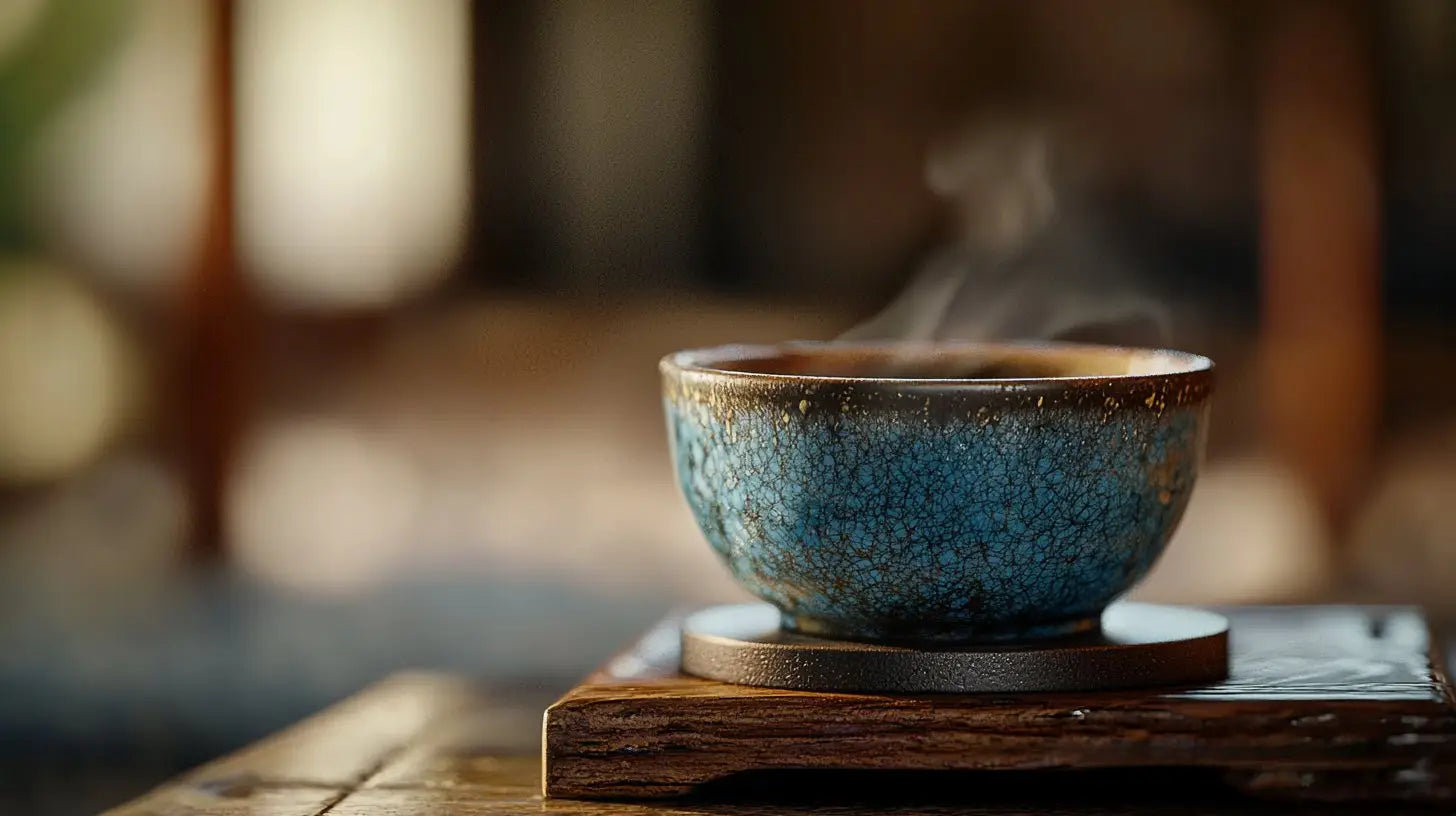
The short answer: Jian Zhan oil spot glaze is a kiln-formed iron crystal pattern, not a printed design or a mystery claim. The speckles appear when iron-rich glaze melts, separates, and cools under specific firing conditions. A good oil spot cup should be judged by visible pattern, usable size, rim comfort, stable foot, and whether it fits the tea you drink.
This refresh preserves the original oil spot search intent while replacing vague phrasing with a practical explanation. For the full pattern comparison, use Tealibere's Jian Zhan glaze guide. To shop current pieces, browse Jian Zhan and Tenmoku tea cups.
Quick Answer: What Is Oil Spot Glaze?
| Buyer question | Clear answer | Useful check |
|---|---|---|
| What does oil spot mean? | Small metallic-looking dots or speckles formed in an iron-rich glaze during firing and cooling. | Look for interior photos, not only exterior closeups. |
| Is oil spot better than hare fur? | No. They are different glaze families, not automatic quality grades. | Choose by look, tea match, and cup comfort. |
| Why do oil spot cups vary? | Kiln position, glaze thickness, firing atmosphere, and cooling speed change the pattern. | Expect handmade variation and check the exact product photos. |
| What tea works well? | Roasted oolong, Pu-erh, black tea, and other teas with body suit small dark cups. | Pair the cup with loose leaf tea and a practical brewer. |
How Kiln Firing Creates Oil Spots
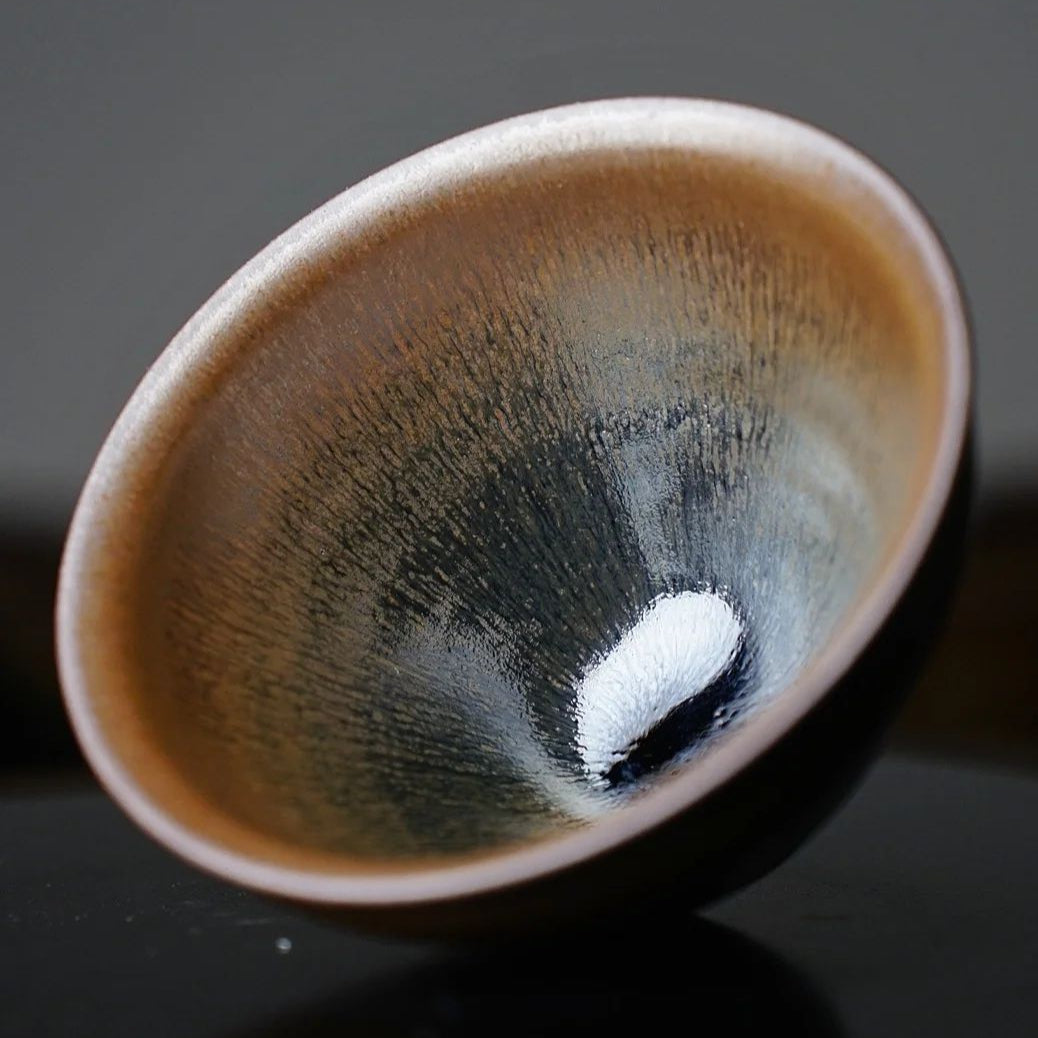
Oil spot glaze starts with an iron-bearing clay body and a mineral glaze that can move under heat. In the kiln, the glaze melts across the cup surface. Under the right firing and cooling conditions, iron compounds gather into visible spots. The effect can look silver, gold, dark brown, or softly reflective depending on glaze recipe, atmosphere, and light.
The process is partly controlled and partly variable. A maker can choose clay, glaze, firing curve, and cup placement, but the exact spot density and distribution still depend on heat movement inside the kiln. That is why oil spot Jian Zhan is usually sold as a handmade visual family rather than a perfectly repeatable pattern.
What Makes an Oil Spot Cup Valuable?
Value should be discussed in concrete terms. A dramatic pattern can be appealing, but a cup still needs to work as drinkware.
| Value factor | What it means | What to avoid |
|---|---|---|
| Pattern clarity | The spots are visible and naturally integrated with the glaze. | Photos that hide the interior or show only extreme closeups. |
| Glaze depth | The surface has dark base color, reflection, and variation rather than a flat printed look. | Claims that every cup is identical. |
| Usable form | The rim, wall thickness, foot, and capacity make it comfortable for tea. | A beautiful object that is awkward to sip from. |
| Gift and display fit | The cup looks distinctive on a shelf but remains useful in a tea session. | Buying only for rarity language without checking size. |
Oil Spot, Hare Fur, Rainbow, and Tenmoku
Oil spot is the speckled family. Hare fur is the streaked family. Rainbow glaze shifts with light and angle. Dark Tenmoku-style cups may be quieter, with less obvious pattern but strong contrast for tea liquor. These labels help you compare appearance, but they do not replace the basic checks: capacity, rim comfort, foot stability, and tea pairing.
If you are also comparing the word Tenmoku, read Jian Zhan vs Tenmoku. In everyday shopping, the terms often overlap. A product called Tenmoku may be bowl-shaped, cup-shaped, Chinese, Japanese-inspired, or simply dark glazed. Always read the product details instead of relying on the label alone.
Daily-Use Buying Checklist
- Choose the size first: 50-80 ml for Gongfu tea; 90-140 ml for a slower solo cup.
- Check the interior: oil spot pattern inside the cup matters more than an exterior-only photo.
- Check the rim: a smooth rim is more important than a dramatic pattern.
- Check the foot: the cup should sit steady on a tray or table.
- Check the light: studio lighting can make reflective spots look stronger than they do at home.
- Check the tea match: roasted oolong, ripe Pu-erh, black tea, and dark tea are practical starting points.
Best Tea Pairings for Oil Spot Jian Zhan
| Tea style | Why it works | Tealibere path |
|---|---|---|
| Roasted oolong | Amber liquor and aroma read well in a small dark cup. | Browse oolong tea |
| Pu-erh | Depth, body, and repeated infusions suit Gongfu cup sizes. | Browse Pu-erh tea |
| Black tea | Warm color and fuller texture make the cup feel substantial. | Browse black tea |
| Mixed loose leaf tea | A practical cup lets beginners learn which teas they prefer. | Browse loose leaf tea |
How to Use Oil Spot Cups in a Gongfu Setup
Oil spot cups work best when they are part of a real brewing flow. Use a gaiwan or small teapot, a fairness pitcher, and one to four cups. Warm the cup before the first pour. Pour short infusions so the tea stays hot but not harsh. If you need the full setup, compare Tealibere's Gongfu tea sets before buying multiple cups.
For a gift, one oil spot cup plus a small tea pairing is usually clearer than a large set. The recipient immediately understands what to do: brew a tea with body, pour a small cup, and notice how the dark glaze frames the liquor.
Care: Keep It Simple
Rinse the cup with warm water before first use. After each session, rinse and let it dry fully. Avoid abrasive scrubbers and strong detergents on the glaze. Jian Zhan is made to be used, but the rim can still chip if it is knocked against heavier teaware.
FAQ
Is oil spot glaze natural?
In traditional Jian Zhan style, oil spot effects come from iron-rich glaze behavior during firing and cooling. The exact pattern varies from cup to cup, so check the seller's photos and details for the piece being offered.
Is oil spot Jian Zhan rare?
Some oil spot effects are more difficult to achieve than others, but rarity should not be the only reason to buy. For daily tea, size, rim comfort, stable foot, and visible interior pattern matter more.
What is the difference between oil spot and Tenmoku?
Oil spot describes a speckled glaze effect. Tenmoku is a broader term often used for dark-glazed tea bowls and cups. A Tenmoku cup can have oil spot, hare fur, a plain dark glaze, or another surface effect.
Can I use an oil spot cup every day?
Yes. Choose a practical capacity, rinse it after use, and avoid treating it as display-only unless the shape is too large, heavy, or delicate for your daily tea routine.
Is an oil spot cup a good gift?
Yes, especially for tea drinkers, ceramic lovers, and people who enjoy small display objects with daily use. Pair it with loose leaf tea or a Gongfu setup so the gift is easy to try.
Next Step
Compare Tealibere's Jian Zhan and Tenmoku cups, read the glaze guide, and connect the cup with a practical Gongfu tea set or beginner-friendly loose leaf tea.