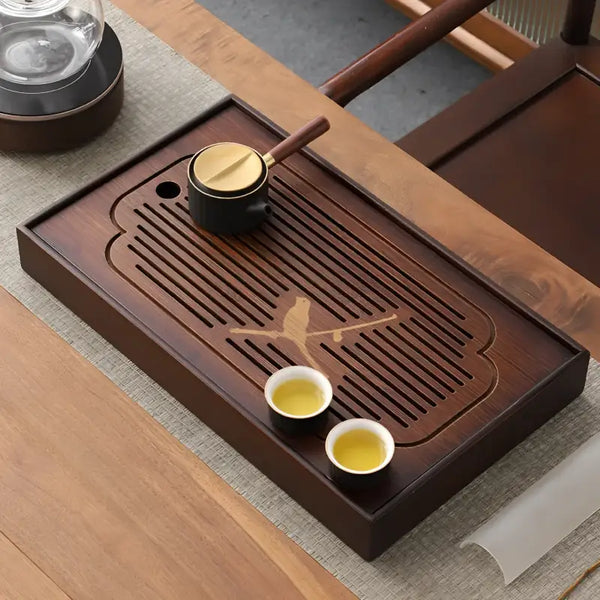
A tea tray is the working surface of a Gongfu tea setup: it catches rinse water, organizes the teapot or gaiwan, keeps cups steady, and gives tea pets a practical place on the table. The best tea tray is not the most ornate one. It is the tray that fits your space, drains cleanly, and makes repeated brewing easier.
This refreshed guide keeps the original tea ceremony intent while making the buying decision more useful. If you already know you need a tray, start with Tealibere's tea tray collection. If you are building a full setup, compare Gongfu tea sets or try the small Gongfu setup advisor.
Quick Answer: What Kind of Tea Tray Should You Buy?
| Your setup | Best tray direction | Why it works |
|---|---|---|
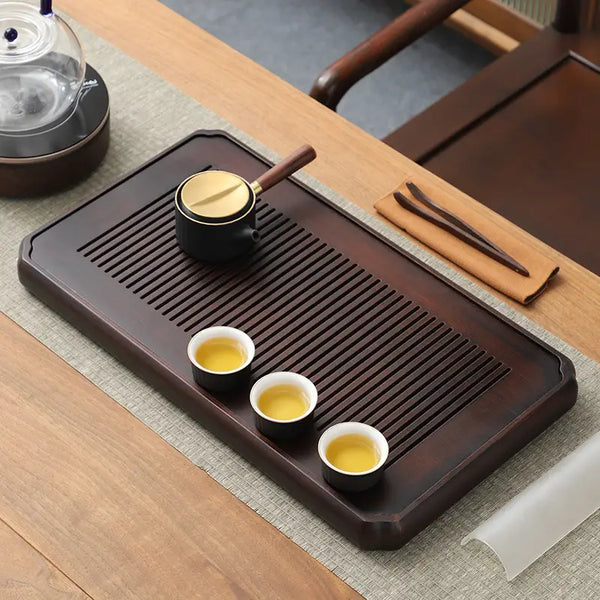
| Small desk or apartment table | Compact bamboo or low-profile tray | Enough room for a gaiwan, fairness pitcher, and two cups without taking over the surface. |
| Daily Gongfu brewing | Tray with reliable drainage or removable catch basin | Rinse water and overflow stay controlled during repeated infusions. |
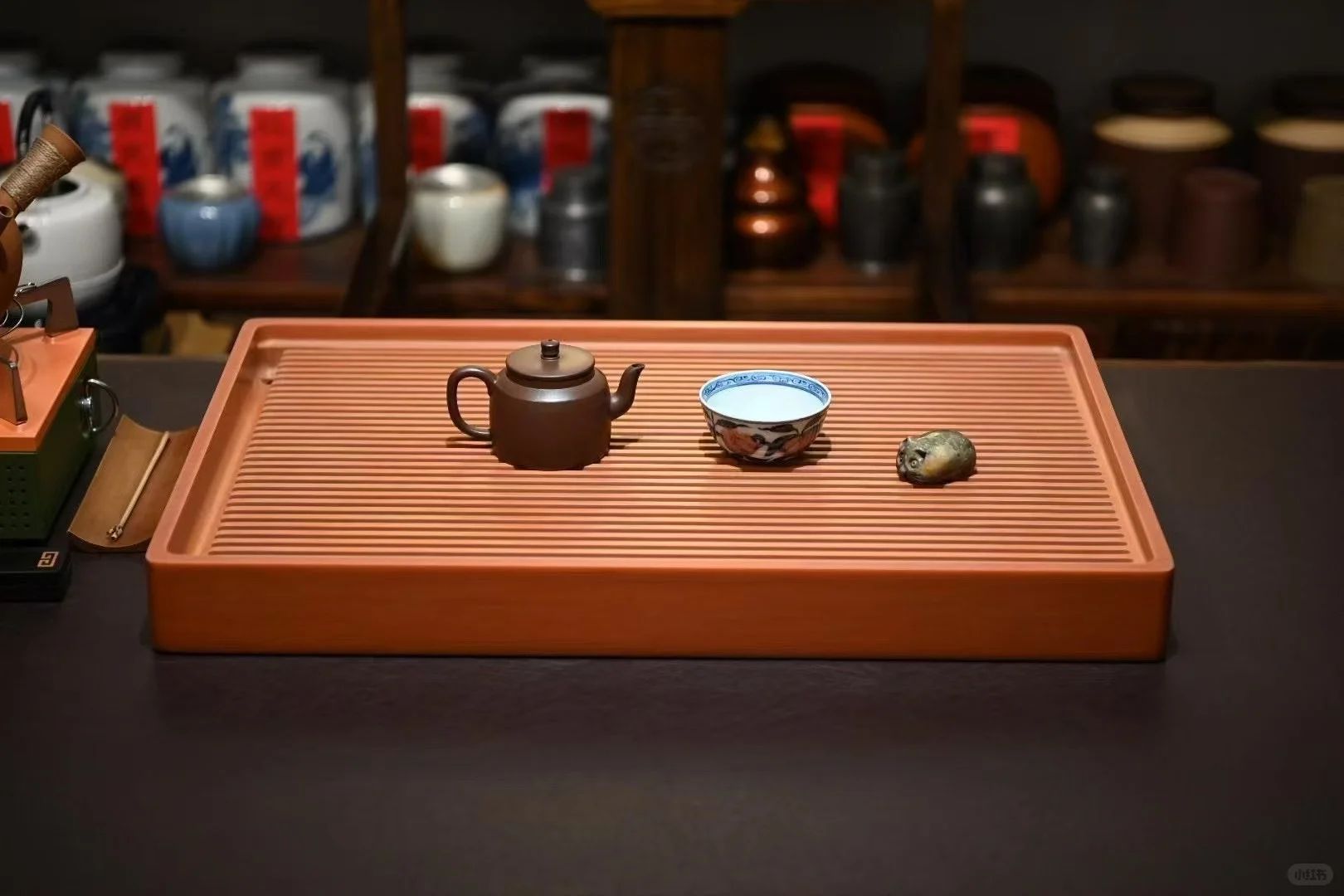
| Tea pet display | Flat tray with a stable wet area | The tea pet can sit near the rinse flow without crowding the brewer. |
| Gift setup | Medium tray plus simple brewer and cups | Easier to understand and use than a decorative table with too many pieces. |
Drainage Comes First
A Gongfu tea tray exists because Gongfu brewing uses water freely. You may rinse leaves, warm cups, clear a teapot spout, or pour leftover tea over a tea pet. Without a tray, that water goes onto the table. With a good tray, the session stays calm and clean.
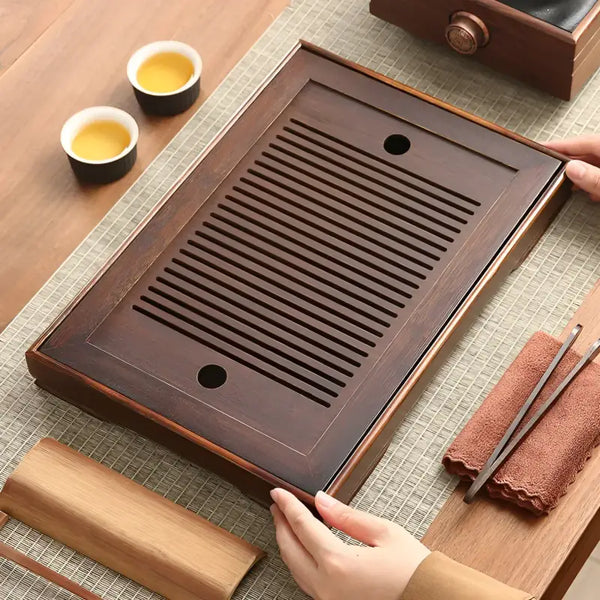
There are two common drainage styles. A wet tray has openings or a slatted top that lets water collect below. A dry tray has a flatter surface and is used with more controlled pouring. For beginners, a tray with a removable reservoir is usually easiest to clean.
Material: Bamboo, Wood, Stone, Ceramic, or Resin?
Material changes weight, cleaning, and visual feel. Bamboo is light, warm, and practical for daily use. Stone and ceramic can feel more solid, but they are heavier and less forgiving if you move your setup often. Resin and composite trays can be easy to clean, but the finish should still feel stable and tea-table appropriate.
| Material | Best for | Watch for |
|---|---|---|
| Bamboo or wood | Daily sessions, warm visual tone, small setups | Dry it after use and avoid standing water. |
| Stone or ceramic | Permanent tea table, heavier cups, display feel | Weight, chipping risk, and storage space. |
| Resin or composite | Easy cleaning and stronger water resistance | Make sure the surface does not feel slippery or cheap. |
Choose Size by the Objects You Actually Use
Before buying, place the objects you use most often on your table: gaiwan or teapot, fairness pitcher, two cups, strainer, and a tea pet if you use one. The tray should hold those pieces with space to pour. If you need a practical example, the Still Waters Bamboo Tea Tray is a good reference point for a compact Gongfu setup.
If you brew with more guests, choose a wider tray. If you mostly brew alone, do not overbuy. Oversized trays look impressive in photos but can be awkward on a real desk.
Tea Tray Features That Matter
- Stable top: cups should not wobble, even when the tray is wet.
- Clean drainage: water should move away from the brewing area without splashing.
- Easy access: a catch basin should be simple to remove and rinse.
- Raised edge: a small lip helps contain water during quick rinses.
- Enough work space: there should be room for a fairness pitcher and cups, not only a teapot.
Where Tea Pets Fit
A tea pet belongs on a tray because it is usually fed with rinse water or leftover tea. Keep it near the wet area but away from the main pouring path. Tea pets are symbolic and personal, not objects that promise a fixed result. For care and meaning, read the Tea Pets Guide or browse tea pets.
Care and Cleaning
After a session, empty the reservoir, rinse the surface, and let the tray dry fully before storing it. Do not let tea water sit in a bamboo or wooden tray overnight. For daily use, a soft cloth and warm water are usually enough. Avoid harsh cleaners near porous wood or clay tea pets.
FAQ
Do I need a tea tray for Gongfu tea?
You can brew without one, but a tray makes rinsing, pouring, and repeated infusions much cleaner. For a small desk setup, a compact tray is usually enough.
Is bamboo a good material for a tea tray?
Yes, bamboo is light, warm-looking, and practical. The tradeoff is care: dry it after use and do not leave standing water in the tray.
What size tea tray should I buy?
Choose by your real setup. A solo gaiwan session needs less space than a teapot, fairness pitcher, four cups, and tea pet. If you are unsure, choose a medium tray with room to grow.
Next Step
Compare Gongfu tea trays, read Bamboo vs Stone Tea Tray, or build a practical first table through the small Gongfu setup advisor.