Tea pet placement is best understood as symbolic table design, not a rule that controls outcomes. A tea pet can make a Gongfu tray feel more personal, mark the wet area of the tray, and carry cultural associations such as protection, prosperity, calm, or playful companionship. It should not be treated as a promise of luck or wealth.
This refreshed guide keeps the Feng Shui search intent while making the language more trustworthy. Browse Tealibere's tea pet collection, read the Tea Pets Guide, or pair a tea pet with a practical tea tray.
Tea Pet Symbolism at a Glance
| Tea pet form | Common association | How to choose responsibly |
|---|---|---|
| Pixiu or guardian form | Protection, confidence, table presence | Choose for shape, size, and meaning you enjoy, not for a promised result. |
| Frog or toad form | Prosperity symbolism in popular culture | Keep the meaning symbolic; check material and tray fit first. |
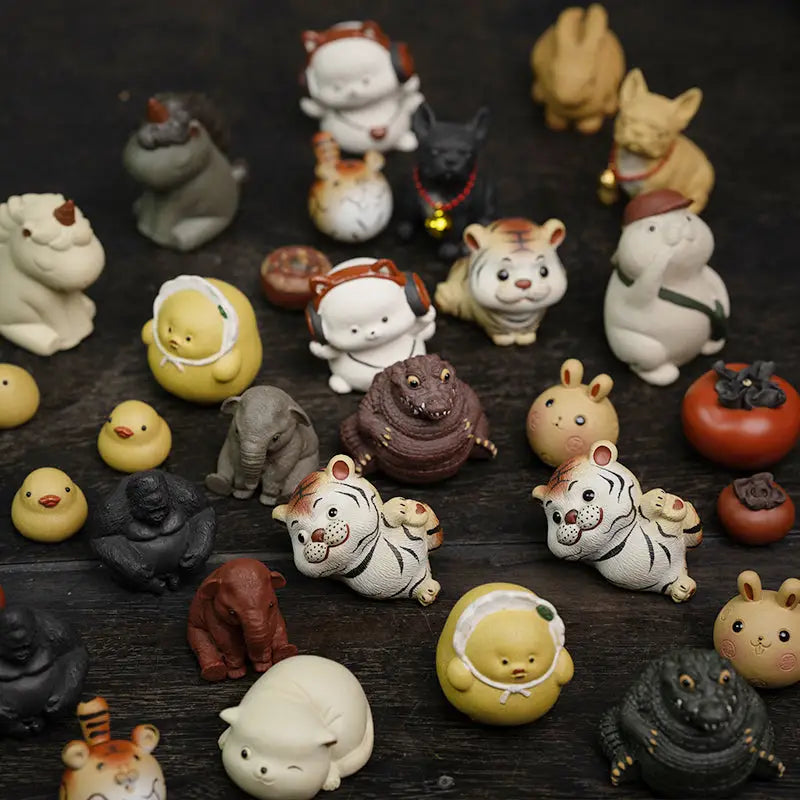
| Animal companions | Playfulness, calm, personality | Good for beginners and gifts because they are easy to understand. |
| Color-changing figures | Visible heat reaction and conversation | Best when you want a clear effect during hot-water rinsing. |
Placement: Practical First, Symbolic Second
Place the tea pet where it can receive rinse water without blocking your hands, cups, teapot, gaiwan, or fairness pitcher. On a small tray, that usually means one back corner or side area. On a larger tray, it can sit near the drainage zone. It should never make pouring awkward.
Feng Shui language can be a gentle way to think about direction, intention, and visual balance. But for a working Gongfu table, the real priorities are safety, stability, and flow.
How to Feed a Tea Pet
During a session, pour a little warm rinse water or leftover tea over the tea pet. Let the surface dry naturally after the session. Do not use soap, perfume, oils, or colored liquids to force a patina. Over time, clay tea pets may develop a softer surface from repeated use.
For color-changing tea pets, use hot water carefully and avoid touching the piece while it is hot. Read Why Does a Tea Pet Change Color? for the difference between heat reaction and slow tea patina.
Choose by Tray Size
| Tray setup | Best tea pet choice | Why |
|---|---|---|
| Small desk tray | One compact figure | Keeps space open for brewing. |
| Medium bamboo tray | One symbolic figure or color-changing piece | Enough room for rinsing and display. |
| Large tea table | One larger figure or two small pieces | Creates a focal point without crowding cups. |
Buying Checklist Before Placement
Before thinking about direction or symbolism, check the object as a working part of the tea table. The base should sit flat. The size should leave room for the brewer's hand and a fairness pitcher. The surface should be easy to rinse. If the piece is color-changing, the product page should make that effect clear so you are not expecting slow clay patina. If the tea pet is a gift, choose a meaning that is easy to explain and a shape that will not dominate a small tray.
Beginner-Friendly Tealibere Paths
- Fox Tea Pet: a clear beginner gift path with playful symbolism.
- Celestial Swan Color-Changing Tea Pet: useful if you want a visible hot-water reaction.
- Panda Tea Pet: friendly, compact, and easy to place on a small tray.
- Fortune Guardian Pixiu Tea Pet: stronger symbolic look for a larger setup.
FAQ
Do tea pets really bring luck?
Tea pets can carry luck, protection, or prosperity symbolism, but they should not be treated as objects that promise a result. Choose one because the meaning and design fit your tea table.
Where should I put a tea pet?
Place it where rinse water can reach it without blocking the brewer. A back corner or side of the tray is usually practical.
Can I use more than one tea pet?
Yes, if the tray has space. For most beginners, one well-chosen tea pet looks calmer and is easier to care for.
Next Step
Browse tea pets, choose a stable tea tray, and use the Tea Pets Guide if you want meaning and care details before buying.